
STAGE 4 · GO DEEPLEVEL · Intermediate6 LESSONSABOUT 32 MINMONEY & ECONOMICS
Bitcoin's monetary policy is not set by a committee. It is written into software that tens of thousands of computers check. These six lessons explain the rules, the math, and the open questions around them. About 35 minutes.
BY THE END OF THIS COURSE YOU WILL BE ABLE TO
- Compute the supply at any halving
- Explain why the 21 million cap holds
- Say what a halving does to miners and does not do to price
- Describe the security budget question honestly
Every lesson ends with a quiz or a challenge; the course is complete when each lesson is.
0 of 6 lessonsStart the course →
LESSONS
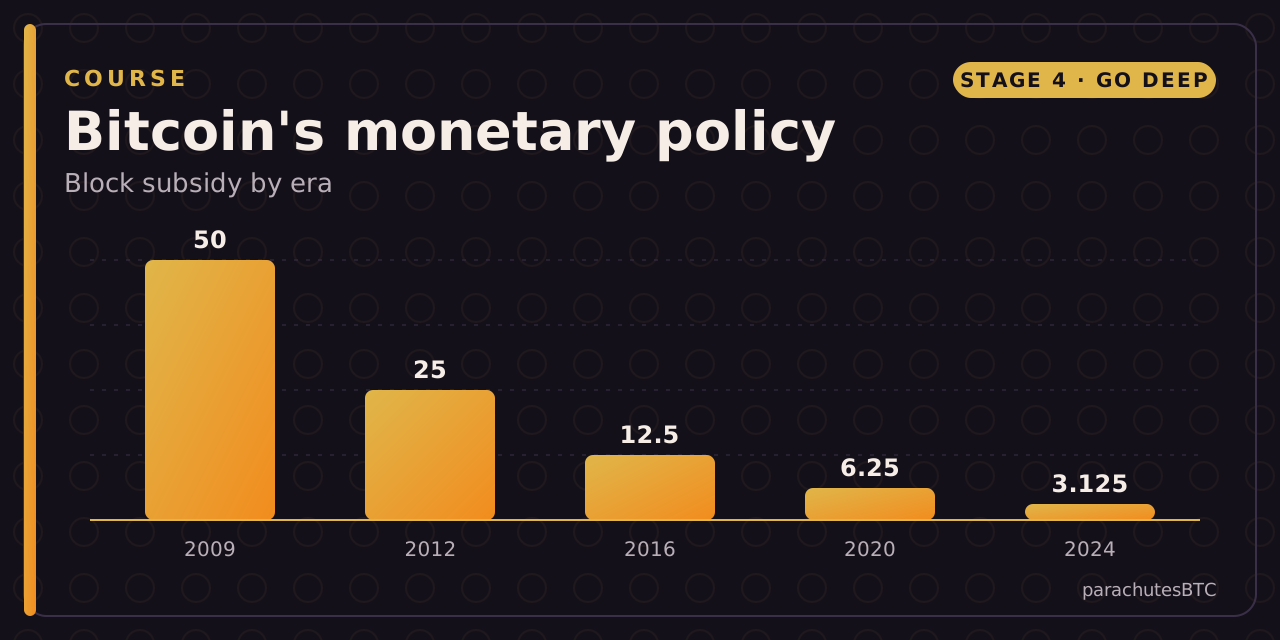
01The supply scheduleNew bitcoin is issued on a declining schedule anyone can compute. Roughly 95% exists already; the last fractions arrive around 2140.✓ quiz⚡ challenge6 MIN✓02Halvings and issuanceEvery 210,000 blocks the subsidy halves. Issuance falls, miners' subsidy income halves overnight, and the price is not part of the rule.▶ 2✓ quiz5 MIN✓03The difficulty adjustmentThe difficulty adjustment keeps blocks near ten minutes regardless of hash power. It is what makes the supply schedule steady in time, not just in total.✓ quiz4 MIN✓04Lost coins and the real supplyMillions of bitcoin are probably lost forever, and Satoshi's million has never moved. The effective supply is smaller than 21 million, and nobody knows exactly by how much.✓ quiz5 MIN✓05Can the 21 million cap be changed?Technically yes, practically no. Changing the cap needs the people who hold bitcoin to run software that dilutes them, and anyone who refuses keeps the original chain.▶ 1✓ quiz6 MIN✓06The security budget and feesMiners are paid by subsidy plus fees. As the subsidy shrinks, security must come from fees. Whether they will suffice is Bitcoin's most serious open question.✓ quiz6 MIN✓