
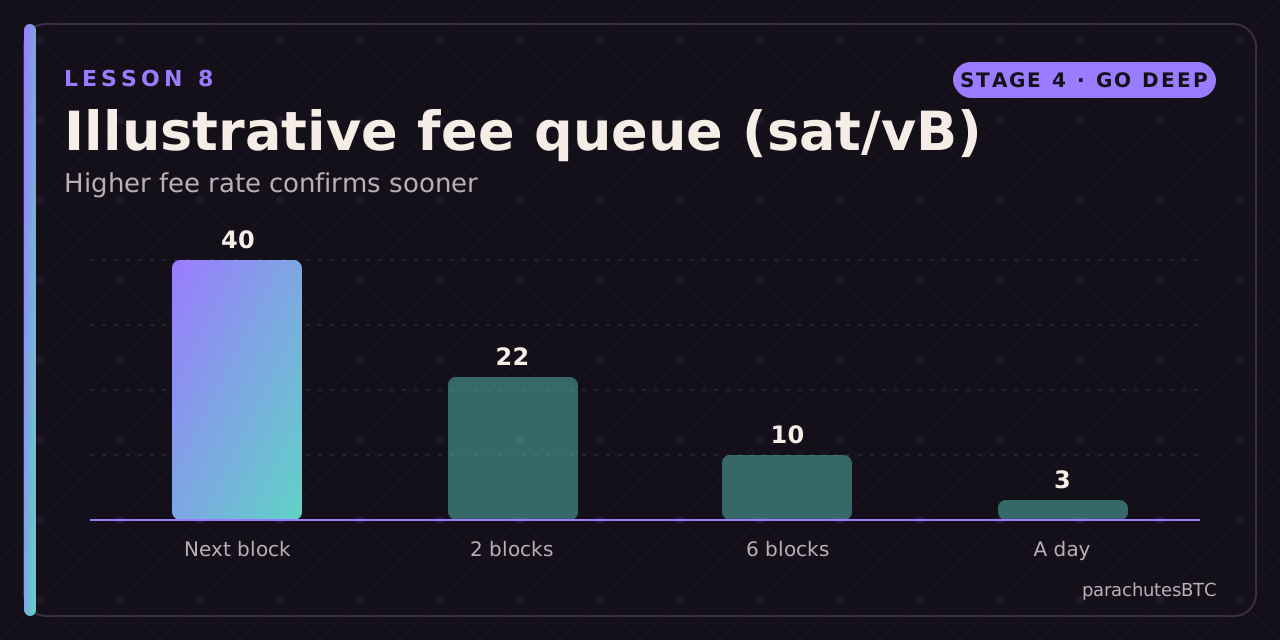
After this lesson you can: read the mempool and choose a sensible fee.
After broadcast, a transaction sits in every node's mempool (memory pool) until mined. Each node's mempool is its own; they mostly agree but need not. Miners fill blocks from theirs, almost always by highest fee rate first.
Fee rate, not fee
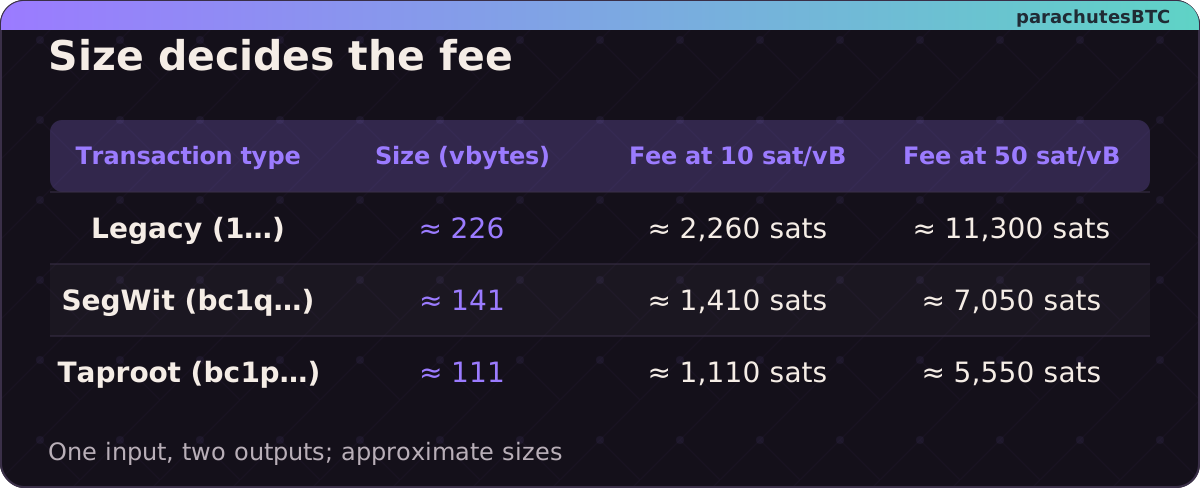
Fees are measured in satoshis per virtual byte. Block space is the scarce thing, so you pay for the bytes your transaction occupies, not the value it moves. A simple single-input, two-output SegWit transaction is about 140 vbytes; at 10 sat/vB that is 1,400 sats.
Why fees move
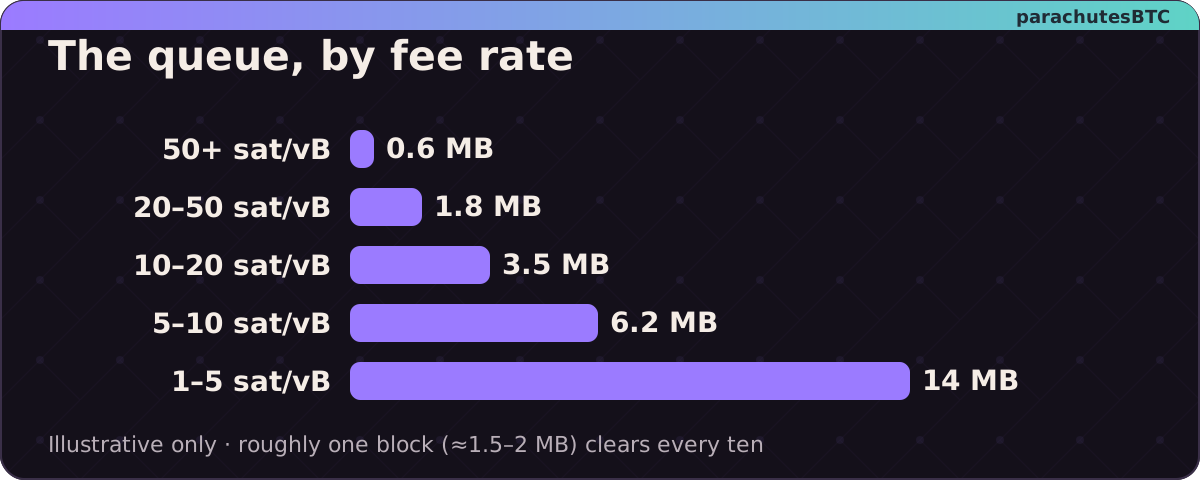
Block space is fixed at about 4 million weight units every ten minutes. When demand exceeds that (bull markets, token crazes, exchange outflows) fee rates rise; when it is quiet, 1 to 3 sat/vB confirms. Wallets estimate from the current mempool; a mempool explorer shows you the queue.
Stuck transactions
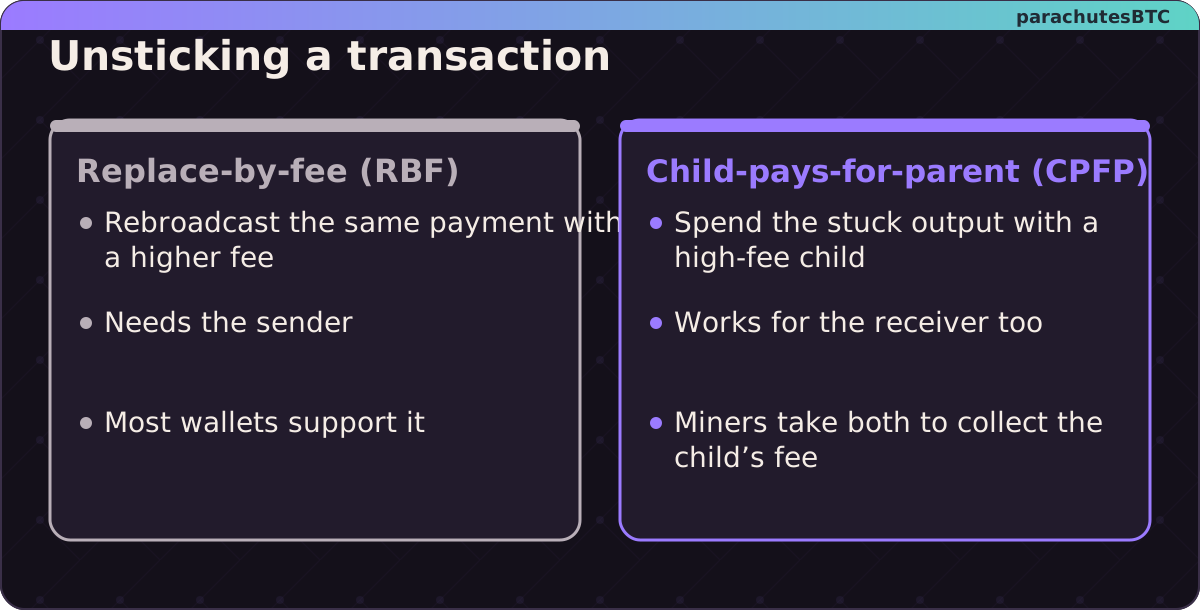
- Replace-by-fee (RBF): rebroadcast the same transaction with a higher fee; most wallets support it.
- Child-pays-for-parent (CPFP): spend the stuck transaction's output with a high-fee child; miners take both.
- Or wait: low-fee transactions confirm when demand drops, or expire from mempools after about two weeks and return to your balance.
The long run
Fees are meant to replace the block subsidy as miner income as it halves away. Whether fees will be enough is one of Bitcoin's genuine open questions; the monetary policy course takes it up.
A 140 vbyte transaction at 25 sat/vB pays how many sats in fees?