What happens to the block subsidy every 210,000 blocks?
How is new bitcoin created?
Why does the total never go past 21 million?
How many satoshis are in 2.5 BTC?
Then prove it: a 3-question quiz · a challenge. The lesson marks itself complete at 100%.
After this lesson you can: explain why there will never be more than 21 million.
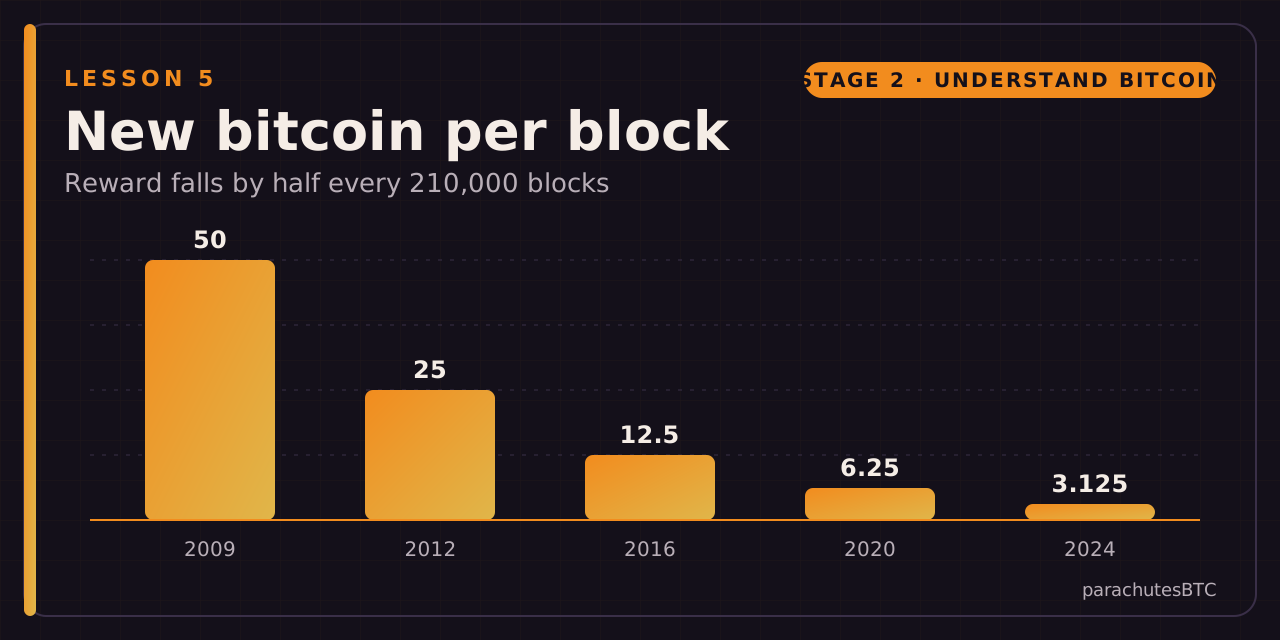
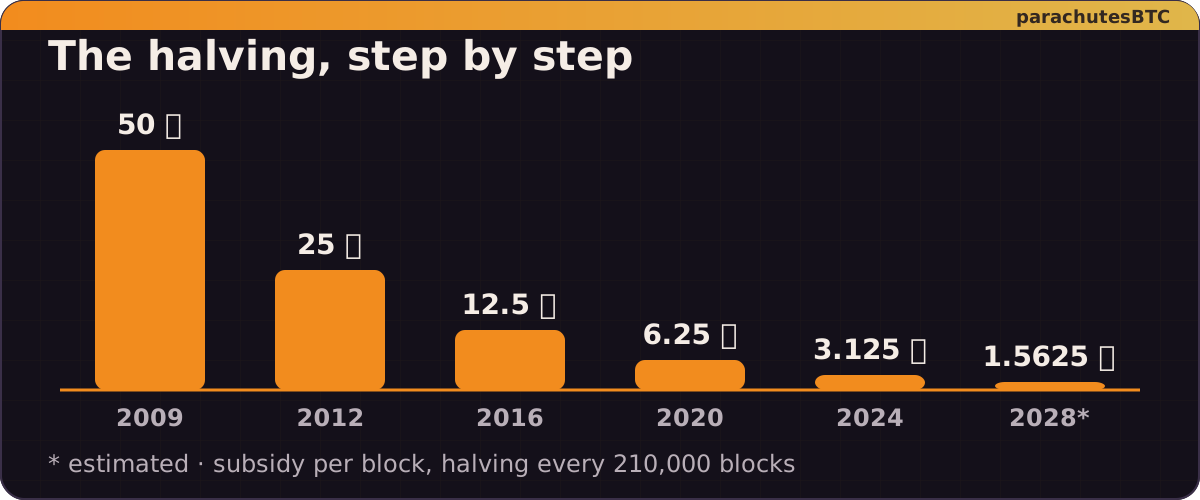
New bitcoin is created only as a reward to miners, and the amount follows a fixed schedule. It started at 50 per block. Every 210,000 blocks, about four years, the reward is cut in half. This is the halving.
The reward per block, halving every 210,000 blocks.
Period
Reward per block
2009 to 2012
50
2012 to 2016
25
2016 to 2020
12.5
2020 to 2024
6.25
2024 onward
3.125
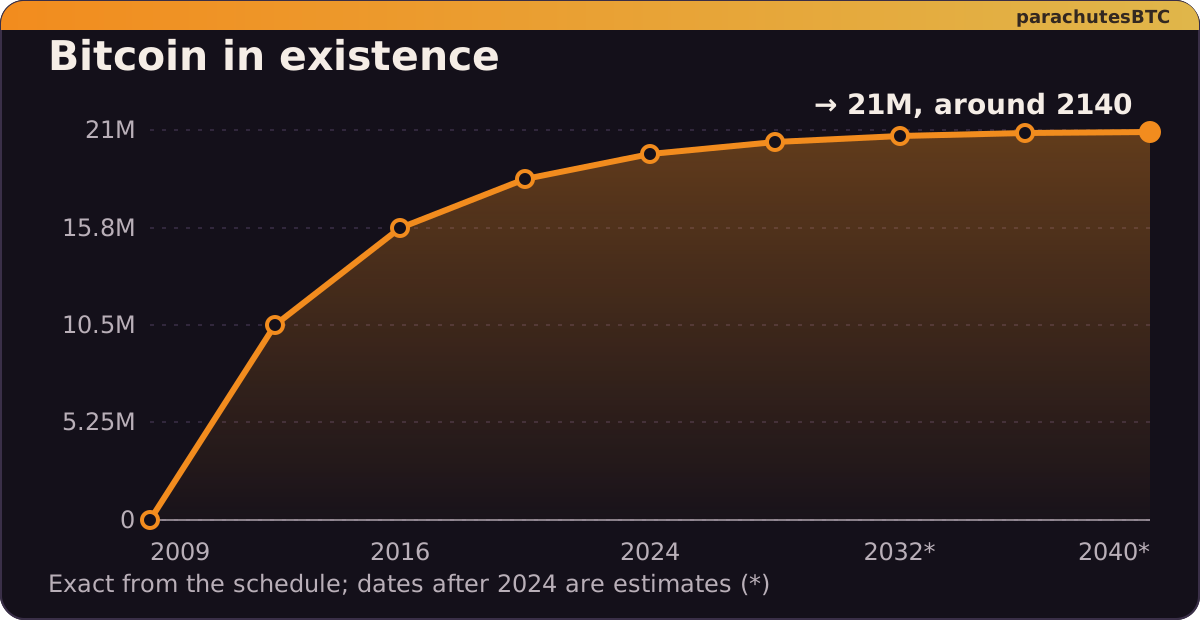
Because the reward keeps halving, the total approaches but never exceeds 21 million. The last fraction will be issued around the year 2140.
Coins in existence at each halving. The curve flattens because each step adds half as much as the last.
Smallest unit
The smallest unit.
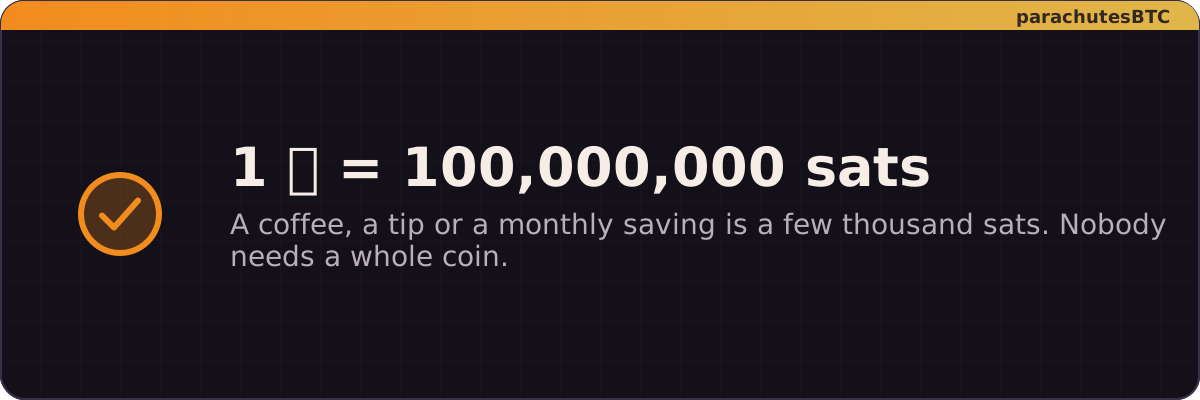
One bitcoin divides into 100 million satoshis ("sats"). You never need to own a whole bitcoin to take part.
01It halvesThat is the halving, about every four years, until issuance ends near 21 million.
02Only as the reward paid to the miner who adds a block, following a fixed scheduleIssuance is the block reward and nothing else; the schedule is public and halves about every four years.
03Because the reward keeps halving, so the sum of all rewards approaches a limit it cannot crossA halving series adds smaller and smaller amounts; it approaches 21 million without exceeding it.