What is the trade-off between holding your own keys and letting a company hold them?
A standard seed phrase comes in two lengths. What is the longer one, in words?
Then prove it: a 3-question quiz · a challenge. The lesson marks itself complete at 100%.
After this lesson you can: say what a private key is and why losing it is final.
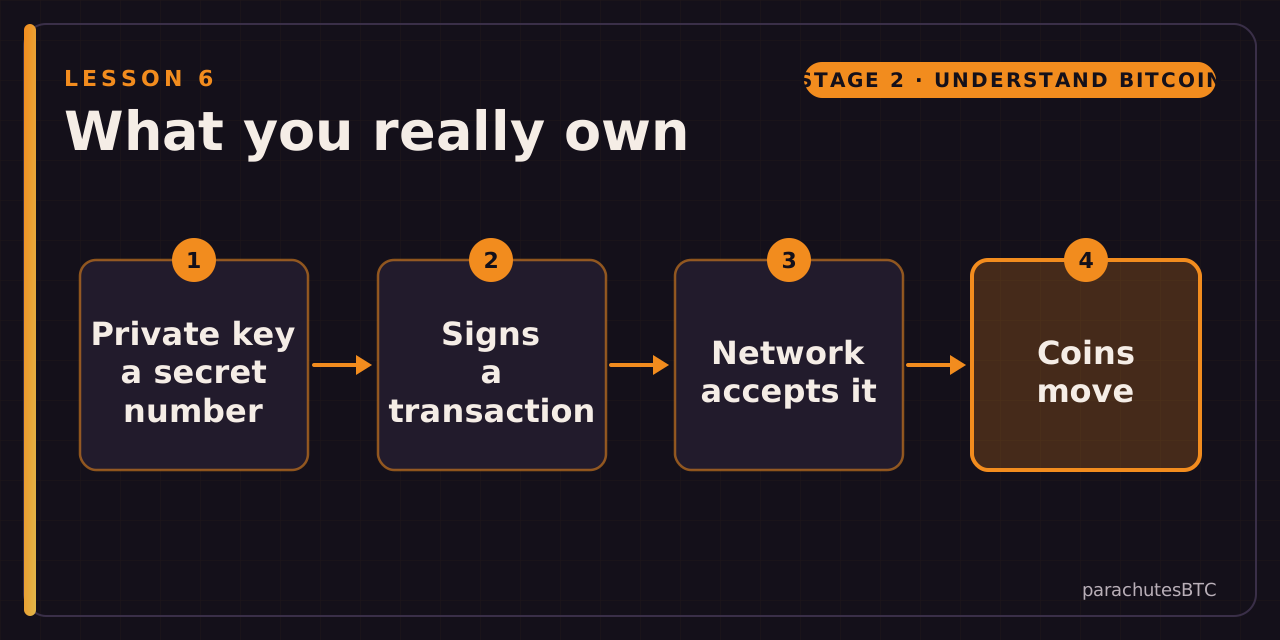
Bitcoin is not stored "in" your phone. The network records which addresses hold which coins. What you actually hold is a private key, a secret that lets you sign transactions that spend from an address.
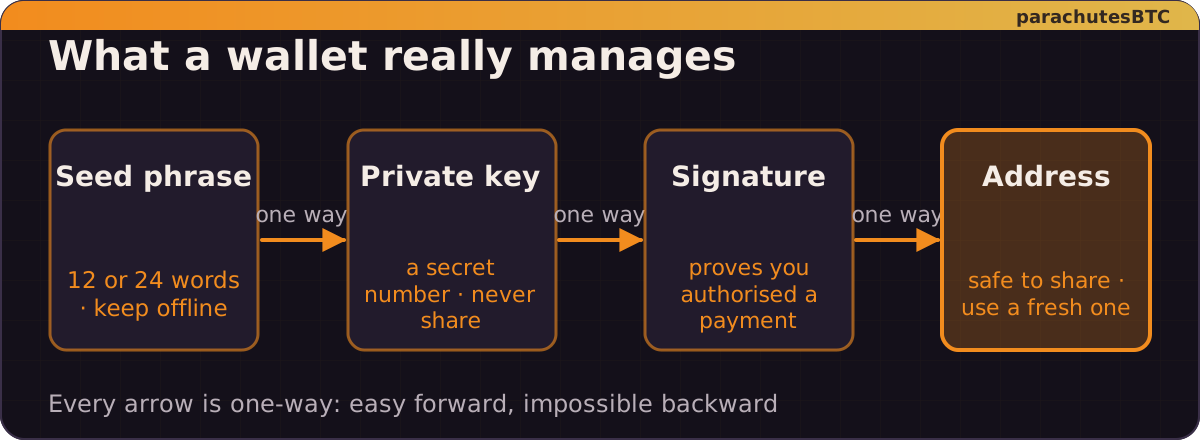
The seed phrase recreates the key; the key signs; the address receives. Each arrow is one-way.
A wallet is software or hardware that manages your keys. It usually gives you a seed phrase, 12 or 24 words that can recreate your keys if the device is lost.
Two ways to hold
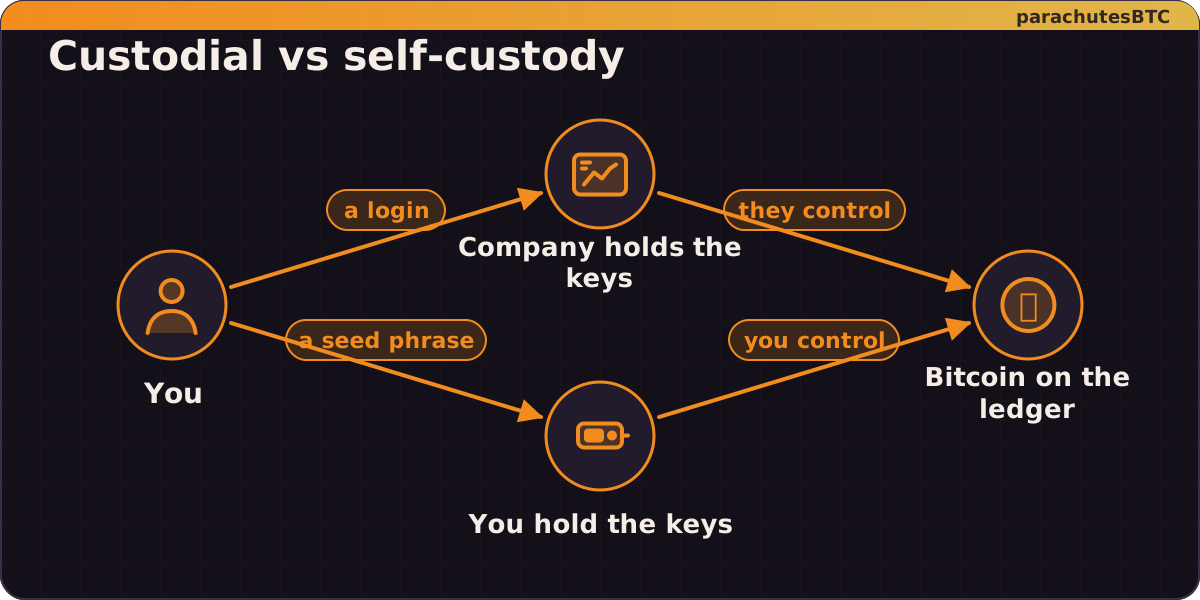
Two routes to the same coins. Only one of them puts the key in your hand.
Self-custody: you hold the keys. No one can freeze or lose your coins on your behalf, and no one can recover them for you either.
Custodial: a company holds the keys and you hold a claim on them, like a bank account. Easier to use, but you rely on the company.
One thing to remember
"Not your keys, not your coins" is a short way of saying the same thing: control belongs to whoever holds the key. The self-custody course covers the practical steps.
Tap a card to flip it.
MINI CHALLENGECount the words
A standard seed phrase comes in two lengths. What is the longer one, in words?
01If a company holds the keys, you hold a promise from the company, not bitcoinControl follows the key. A custodian can freeze, lose or lend what it holds.
02It manages the keys that control your bitcoin; the coins themselves are on the ledgerBitcoin is not stored in the device; the wallet holds keys that prove the right to spend.
03Your own keys give you full control but no one can help if you lose them; a custodian can help but also controls the coinsSelf-custody is powerful and unforgiving; custody is convenient and requires trust.