
After this lesson you can: explain what a pool decides and what Stratum V2 changes.
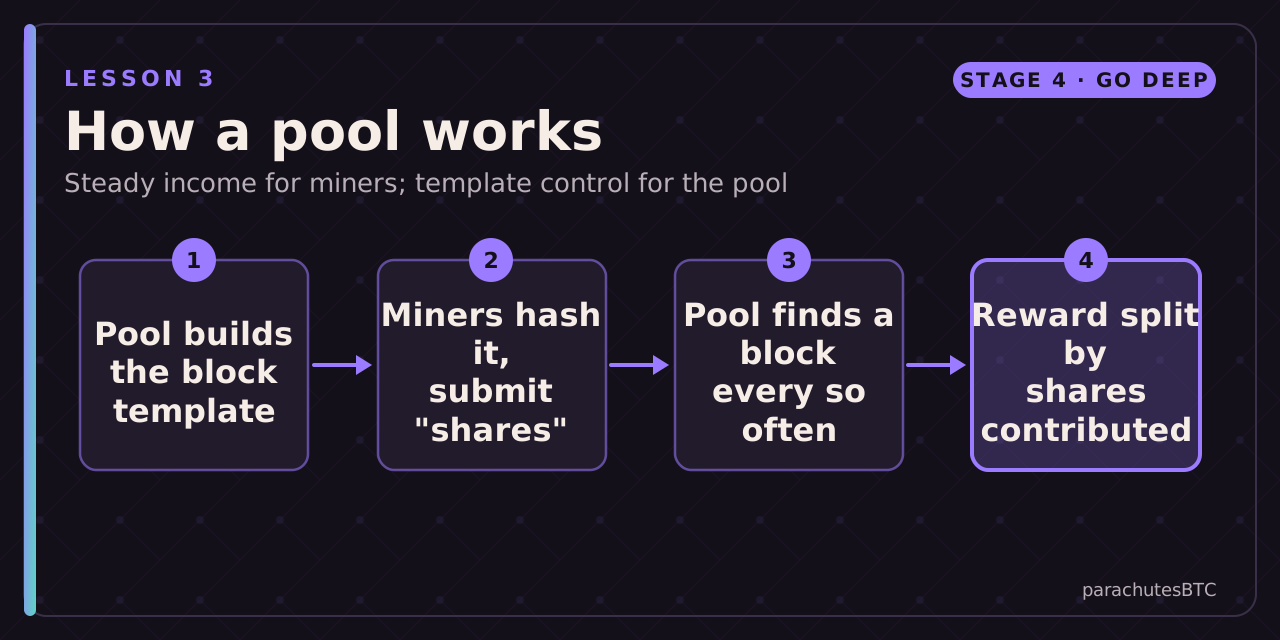
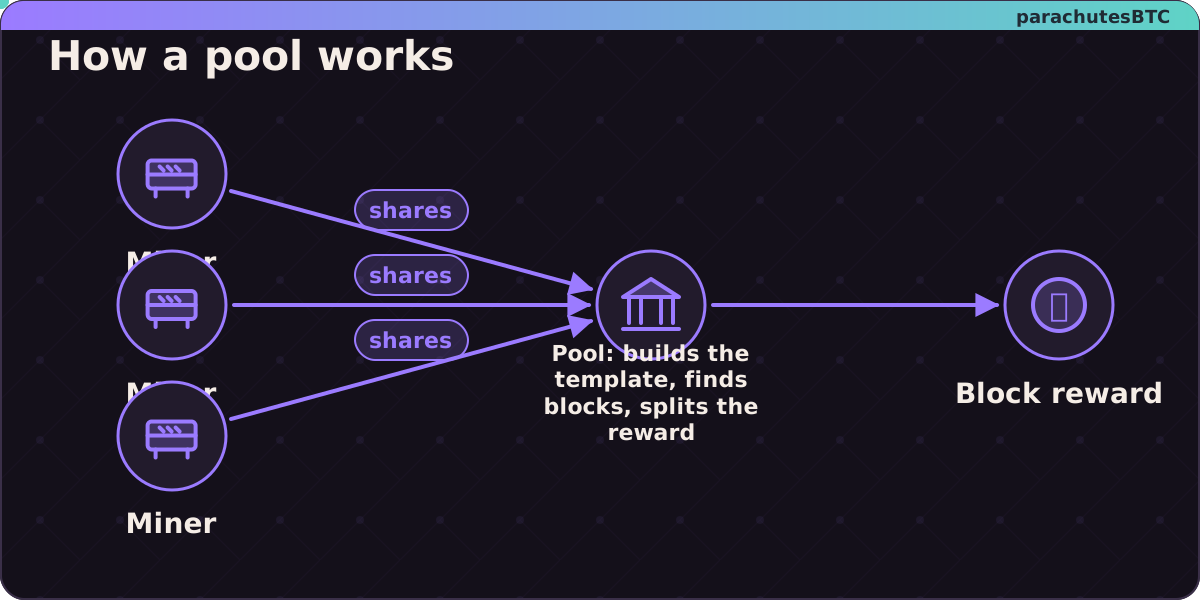
A single machine might find a block once in several years. Pools fix the variance: thousands of miners work on the pool's template, prove their work with shares (hashes that beat an easier pool target), and split the rewards in proportion when the pool finds a real block, minus a fee of around 1 to 3%.
The concentration problem
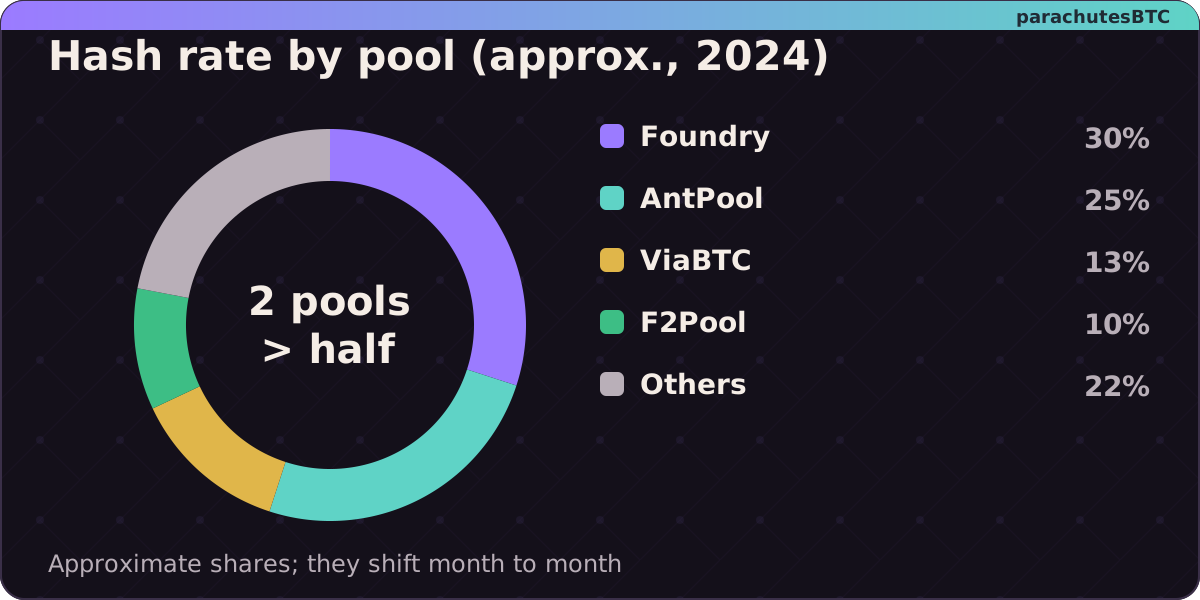
The pool, not the miner, decides which transactions go in the block. A few large pools account for most of the hash rate. If two or three of them colluded, or were compelled, they could censor transactions or attempt reorganisations. They cannot change the rules (nodes would reject the blocks), but transaction selection is real power. Miners can switch pools in minutes, which limits it; it is still a known weakness.
Stratum V2
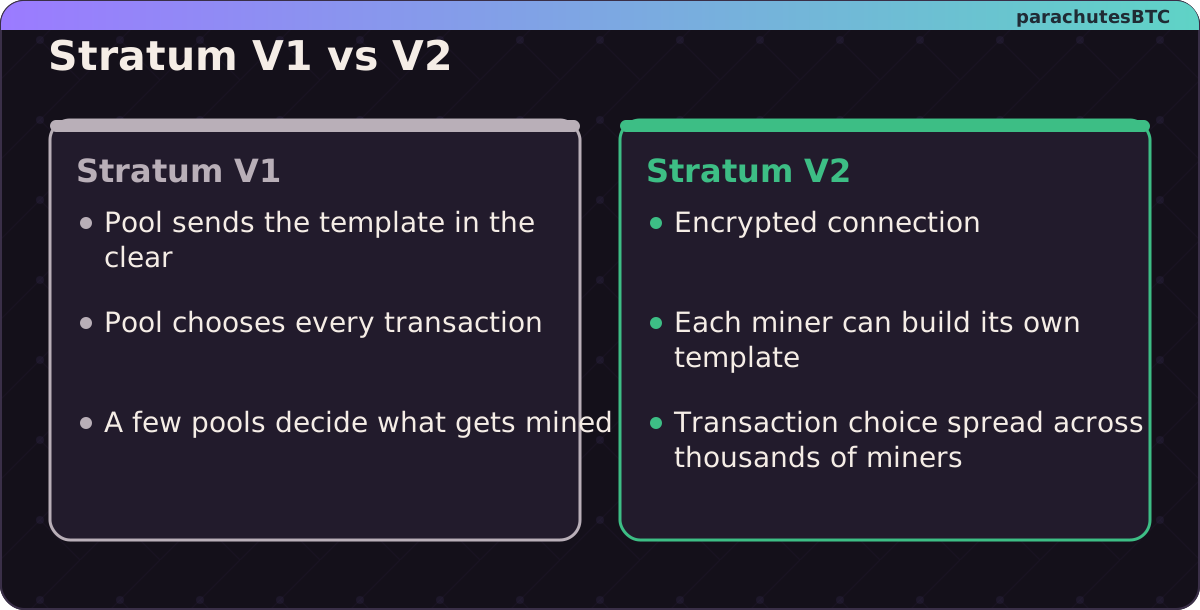
The original pool protocol, Stratum, sends templates from pool to miner in the clear. Stratum V2 encrypts the connection and, in its full form, lets each miner build its own block template with its own transaction choices, sending only the header work to the pool. That returns transaction selection to thousands of miners instead of a few pools. Adoption is growing, driven partly by exactly the censorship concern above.
Payout schemes
Pools differ in how they pay: PPS (pay per share, fixed, pool takes the variance), PPLNS (pay per last N shares, miners share the luck), and FPPS (PPS plus a fee share). The details decide who bears risk when luck runs cold.
A pool controls 25% of hash rate. On average, what percentage of blocks does it find?