
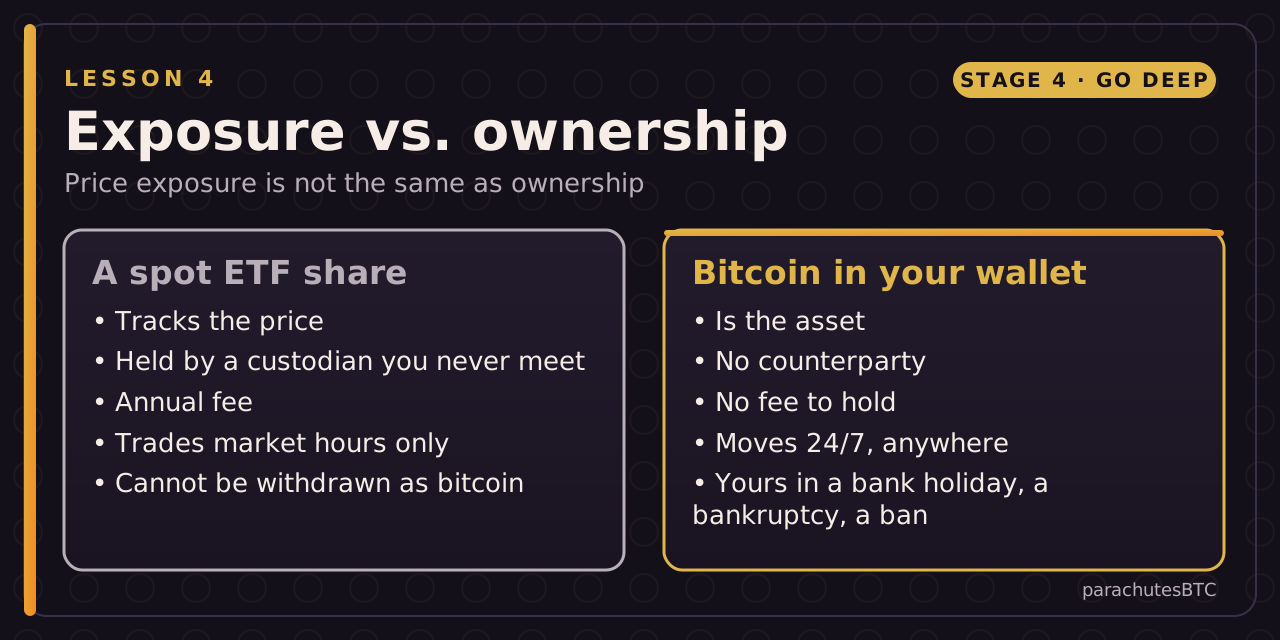
After this lesson you can: explain what an ETF holder owns and does not own.
In January 2024 the US approved spot bitcoin ETFs, and within a year they held more bitcoin than any entity except Satoshi. They matter, and they are not bitcoin.
What an ETF is
A fund buys bitcoin, stores it with a custodian (mostly one large exchange), and sells shares that track the price minus a fee. You can hold it in a brokerage or retirement account, and that convenience is real.
What it is not
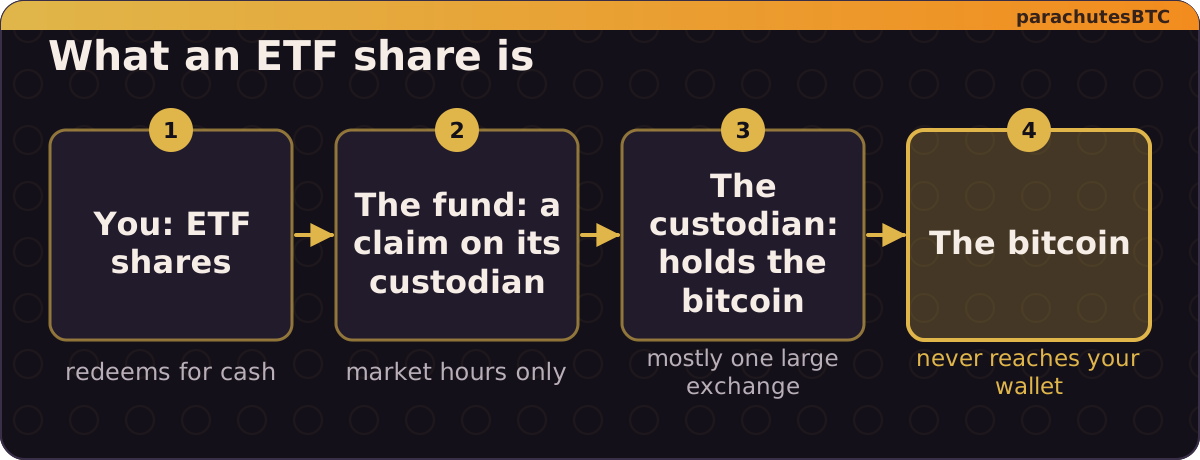

- You cannot withdraw the bitcoin. Shares redeem for cash.
- You hold a claim on a fund that holds a claim on a custodian. Two counterparties.
- It trades only during market hours. Bitcoin does not.
- "Paper bitcoin": every layer of claims is a place where more claims than coins can exist, as happened with gold and with 2022's lenders.
Futures ETFs and other wrappers
Futures-based funds hold contracts, not coins, and lose a little each month rolling them. Treasury companies (next lesson) are leveraged, corporate wrappers. Each wrapper adds something (access, leverage, tax treatment) and removes the thing that makes bitcoin different: that you can hold it with no one's permission.
The bitcoiner view
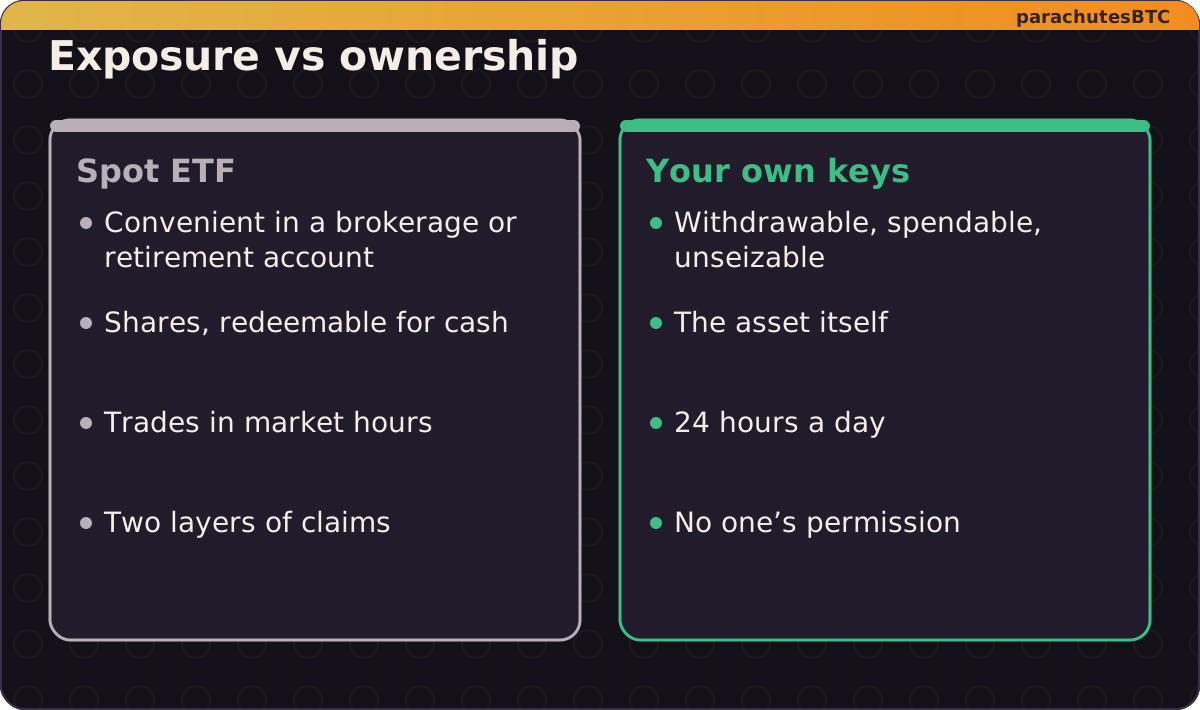
ETFs are a bridge: they let capital that cannot hold keys gain exposure, and they have legitimised bitcoin with institutions. For an individual, the question is whether you want exposure to the price or ownership of the asset. If the answer is ownership, nothing but keys delivers it.
Open any spot bitcoin ETF's own website and find the page that lists its bitcoin held (often "holdings" or "key facts"). How many whole bitcoin does it hold today, in thousands? (Any figure you read is right.)