
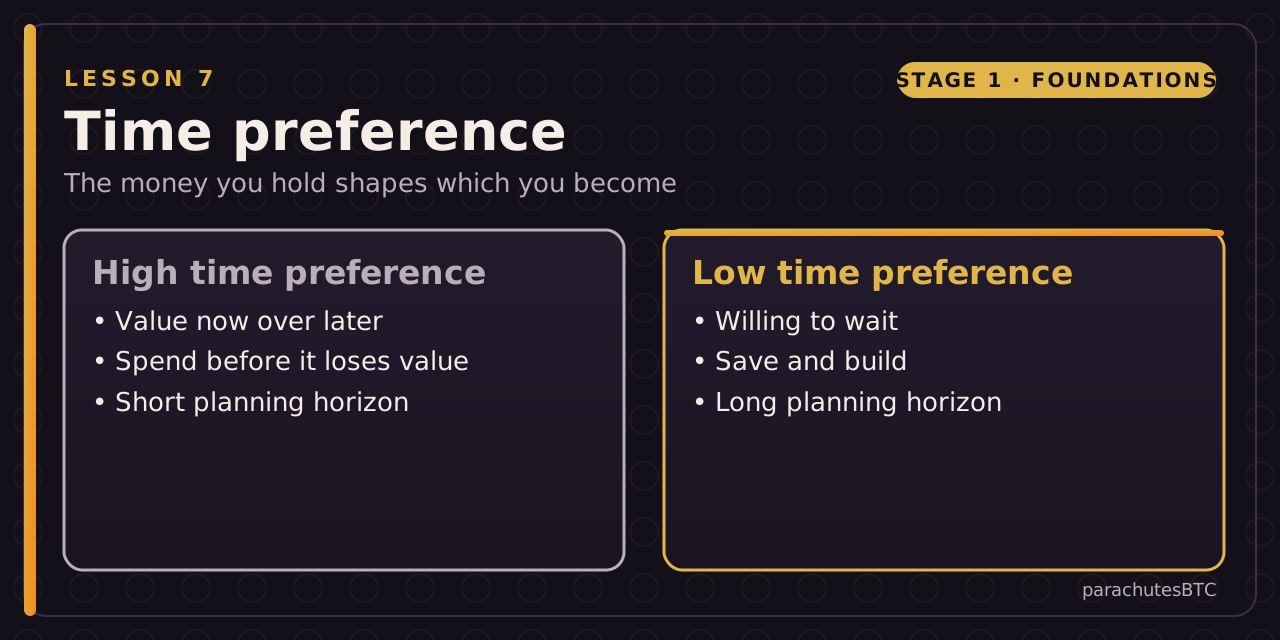
After this lesson you can: explain time preference and how money shapes it.
Time preference is how strongly you prefer value now over value later. Everyone has some; the question is how much. The Austrian economists argued it is the root of saving, investment and civilisation itself: building anything that lasts requires people willing to wait.
Money changes behaviour
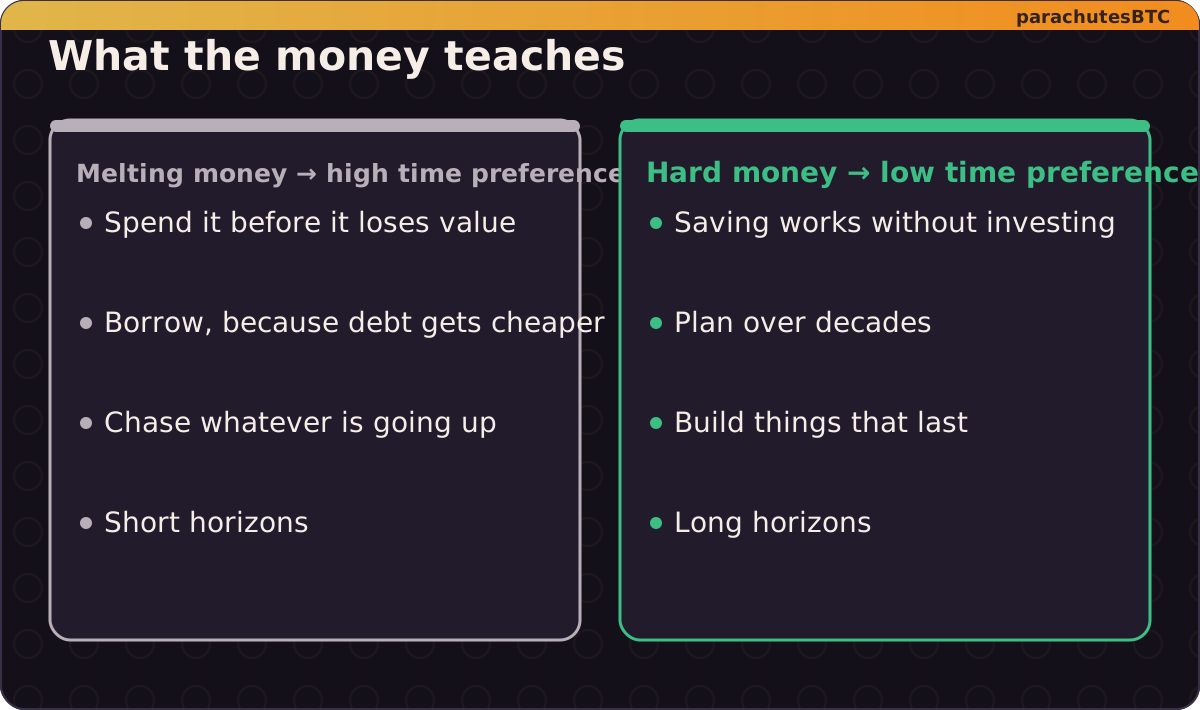
If your money loses value every year, waiting is punished. The rational move is to spend it, or to chase returns in whatever is going up. Fiat money raises time preference across a whole society: more consumption, more debt, less saving, shorter horizons.
If your money holds or gains value, waiting is rewarded. You can save without becoming an investor, plan over decades, and build. Hard money lowers time preference. This is the argument Saifedean Ammous makes in The Bitcoin Standard, and the reason bitcoiners talk about "low time preference" as a way of life, not just a portfolio.
Compounding both ways
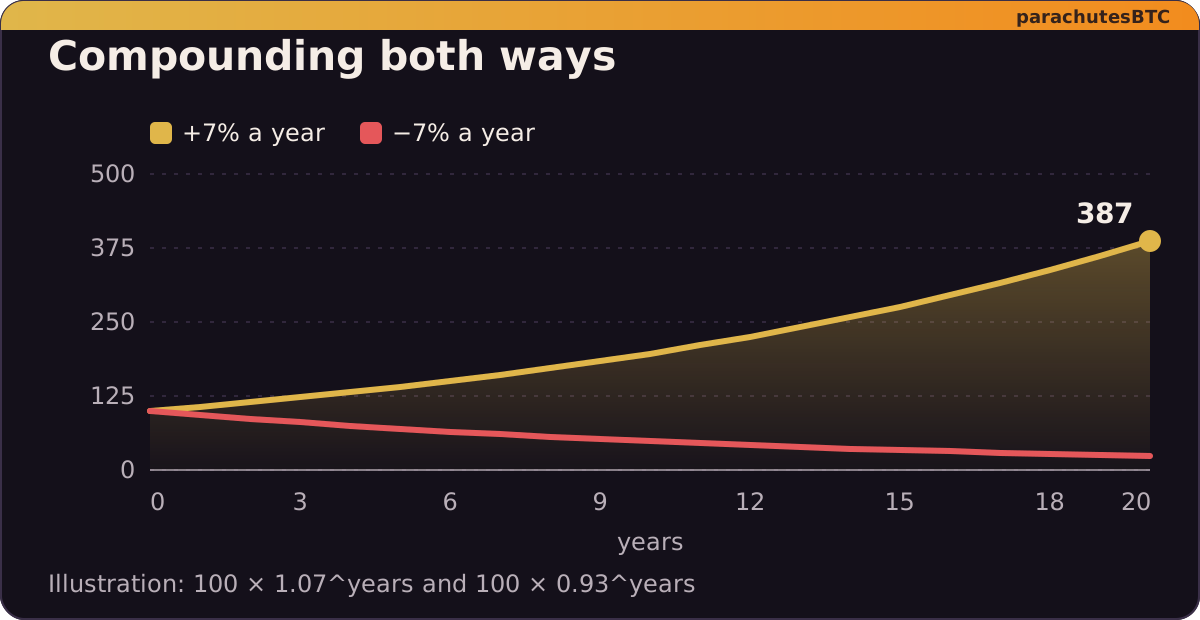
Patience only pays if what you hold keeps its value. Illustration only: 100 growing at 7% a year is about 197 after ten years and 387 after twenty. The same 100 losing 7% a year is 48 after ten and 23 after twenty.
If you would take $100 today over $110 in a year, your time preference is above what annual rate, in percent?
Next
Money and the state have been joined for a century. The last lesson asks whether they should be.