What happens to people at the front of the queue for new money?
In the 2020–21 expansion, which group received new money first: (1) wage earners, (2) banks and asset holders, or (3) pensioners? Enter the number.
Then prove it: a 3-question quiz · a challenge. The lesson marks itself complete at 100%.
After this lesson you can: explain who wins and who loses when new money enters.
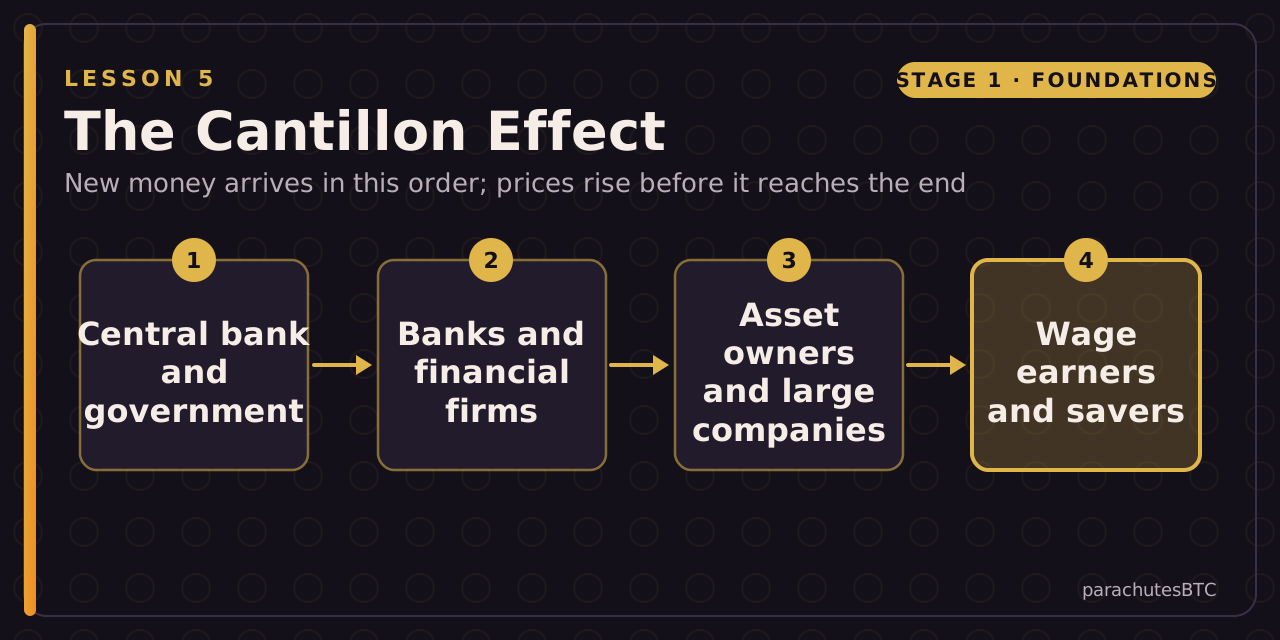
In the 1700s, an Irish-French banker named Richard Cantillon noticed something that economists still name after him. When new money enters an economy, it does not arrive everywhere at once. It enters at specific points, and whoever is closest to those points benefits most.
The order of arrival
Governments and central banks create it and spend it, or buy bonds with it.
Banks and financial institutions receive it next, as reserves, bailouts and cheap credit.
Asset owners and large borrowers get the credit and buy houses, stocks and companies, pushing their prices up.
Wage earners and savers get it last, as a raise that arrives after rent, groceries and housing have already repriced.
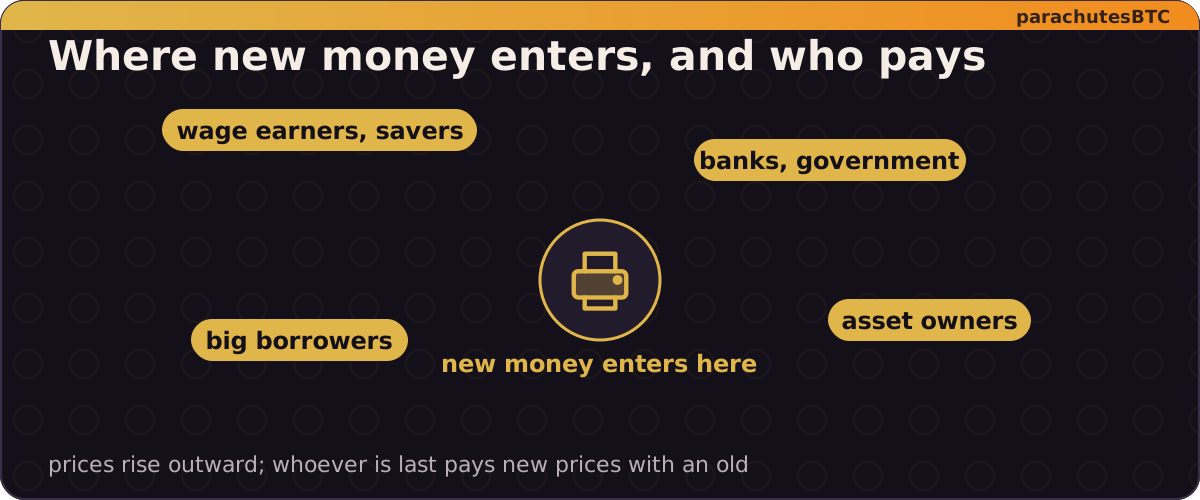
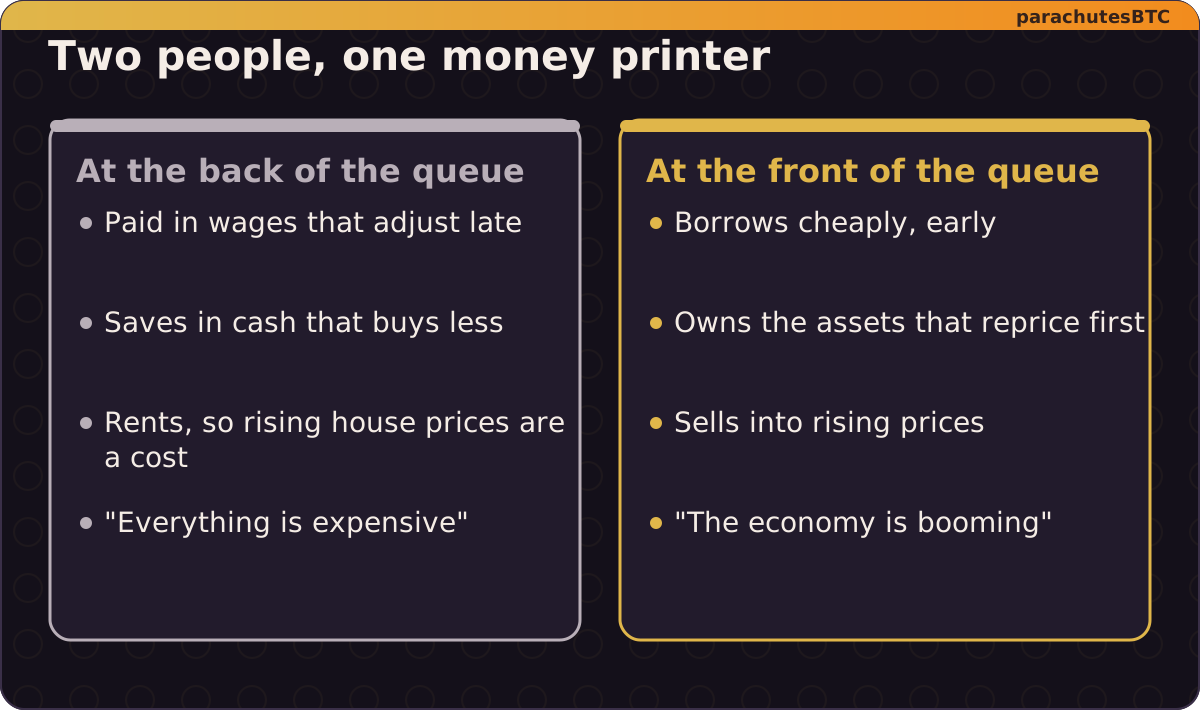
The people at the front of the queue spend new money at old prices. The people at the back live with new prices and old incomes.
New money ripples outward. Prices have already moved by the time it reaches the edge.
Why it matters
Same decade, opposite experiences.
This is the mechanism behind the sense that "everything is expensive and I can't get ahead" even when the economy is "growing". It also explains why decades of money creation coincide with record asset prices and a widening gap between people who own assets and people who do not.