
After this lesson you can: write your own threat model in four lines and fix the first thing it exposes.
Threat model first
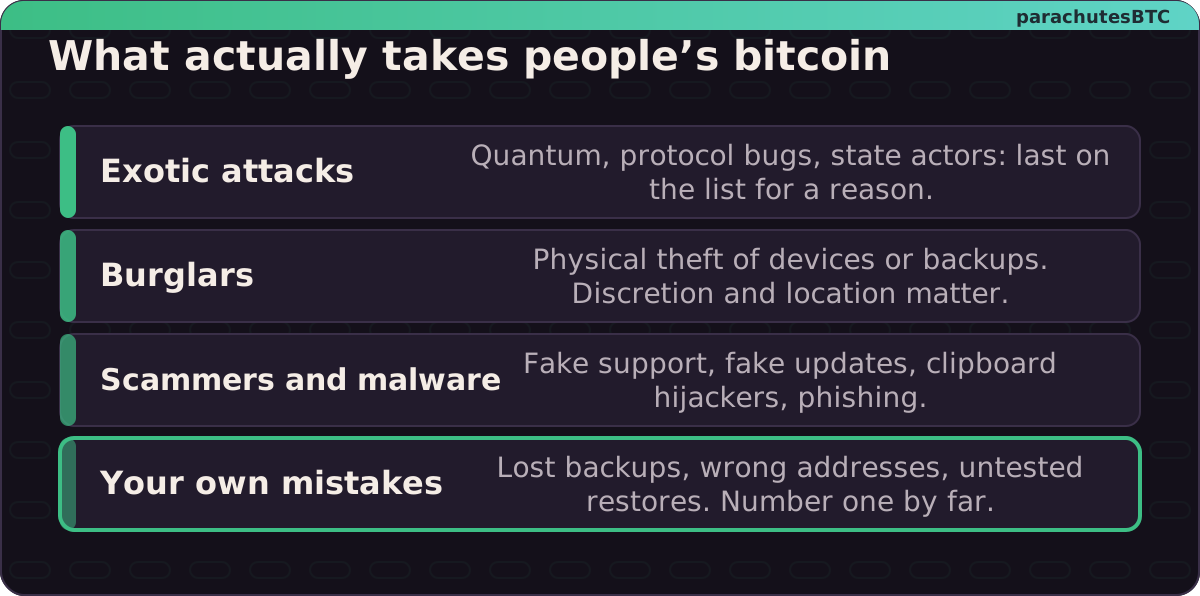
Ask: who is likely to come after my bitcoin, and how? For most people the honest answers are, in order: my own mistakes, remote scammers and malware, a burglar, and only then anything exotic. Design for the likely threats first. The 2026 Coldcard incident is a reminder that "my own mistakes" includes trusting a device blindly: the users who survived it had added their own entropy.
The habits
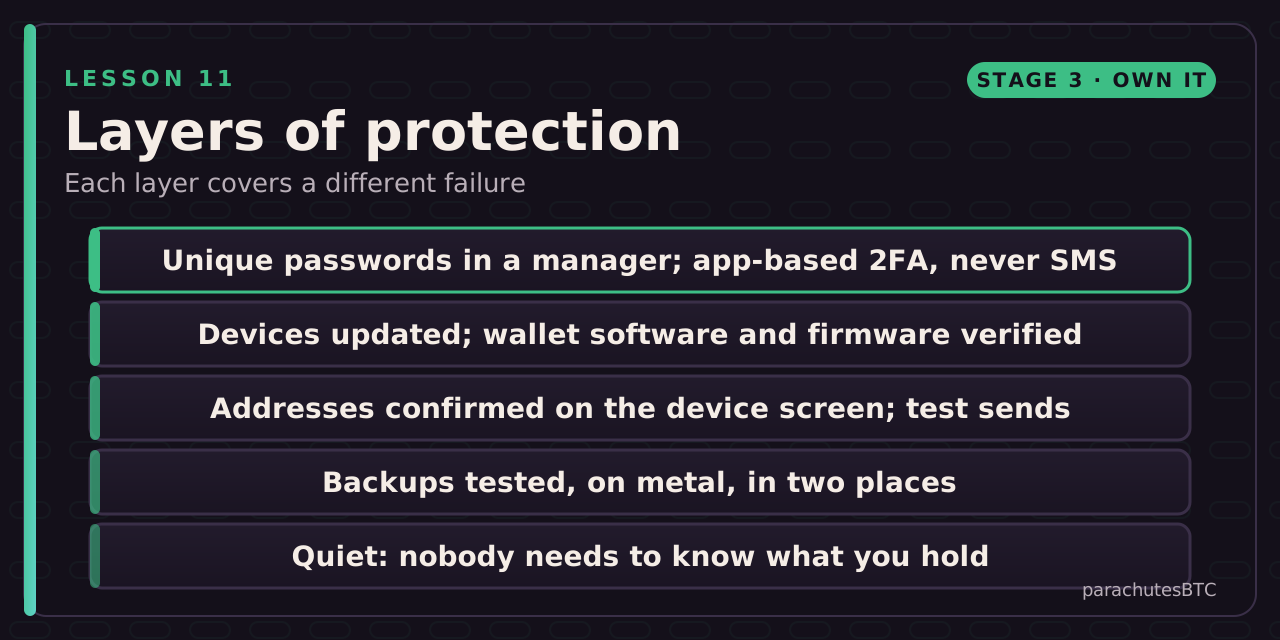
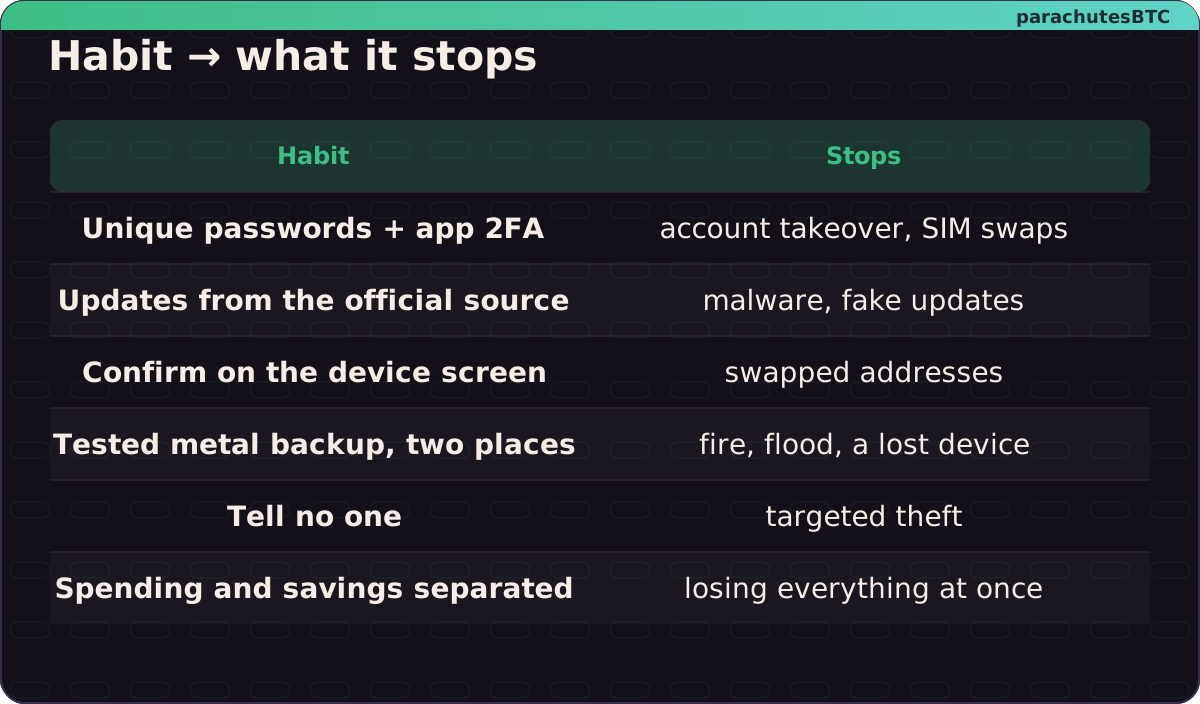
- Accounts. A unique password for every service that touches bitcoin, including your email, in a password manager. Two-factor with an authenticator app or hardware key. Never SMS; SIM swaps are routine.
- Devices. Keep the phone, computer and signer updated. Download wallet software and firmware only from the developer's site and verify signatures (lesson 7).
- Transactions. Confirm addresses on the signer's screen. Send a test amount first for anything large. Beware address poisoning: compare the whole address, not just the ends.
- Backups. Tested by restore, on metal, in two places.
- Discretion. Do not post holdings, wallet screenshots or exchange balances. Do not tell people you hold bitcoin. The five-dollar wrench attack (someone forcing you to sign) is defeated mostly by nobody knowing there is anything to take.
- Separation. Spending money in a hot wallet; savings in cold storage; never the whole stack on one device.
Plan for the worst day
If your phone is stolen today, what can the thief do? If your house burns, what survives? If you die, who can find the coins? If any answer is "everything is lost", fix that first.
Write your threat model: (1) most likely threat, (2) what it would get, (3) the habit that stops it, (4) when you will do it. How many lines did you write?