What happened to trust at each step in money's history?
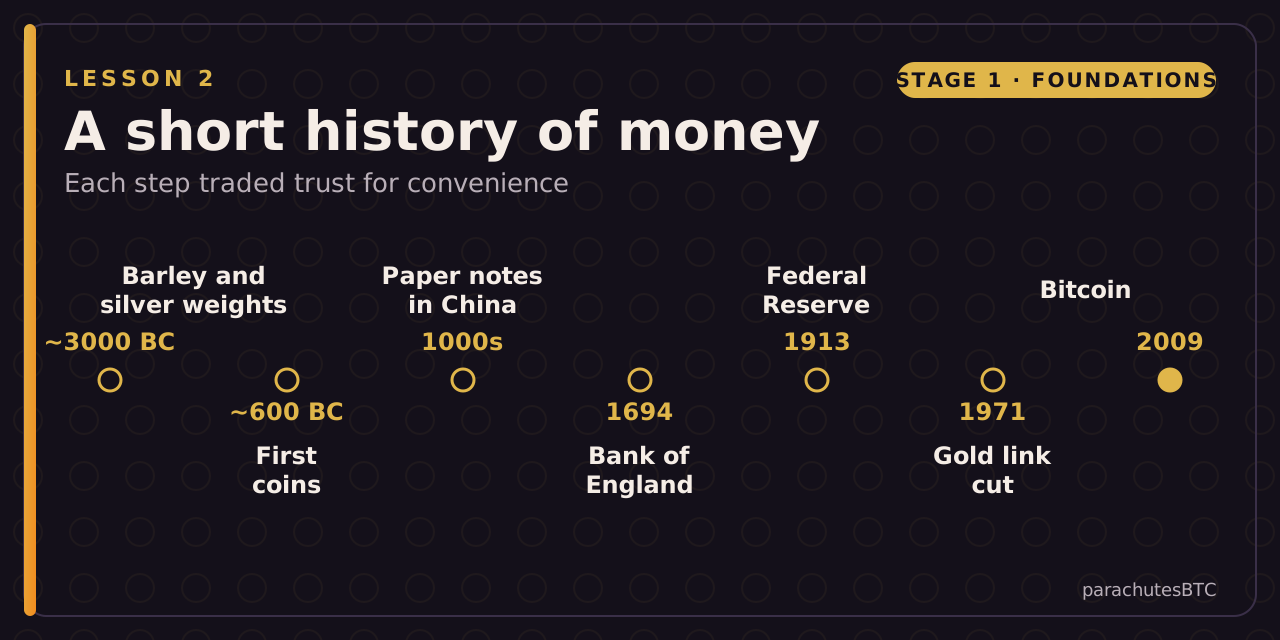
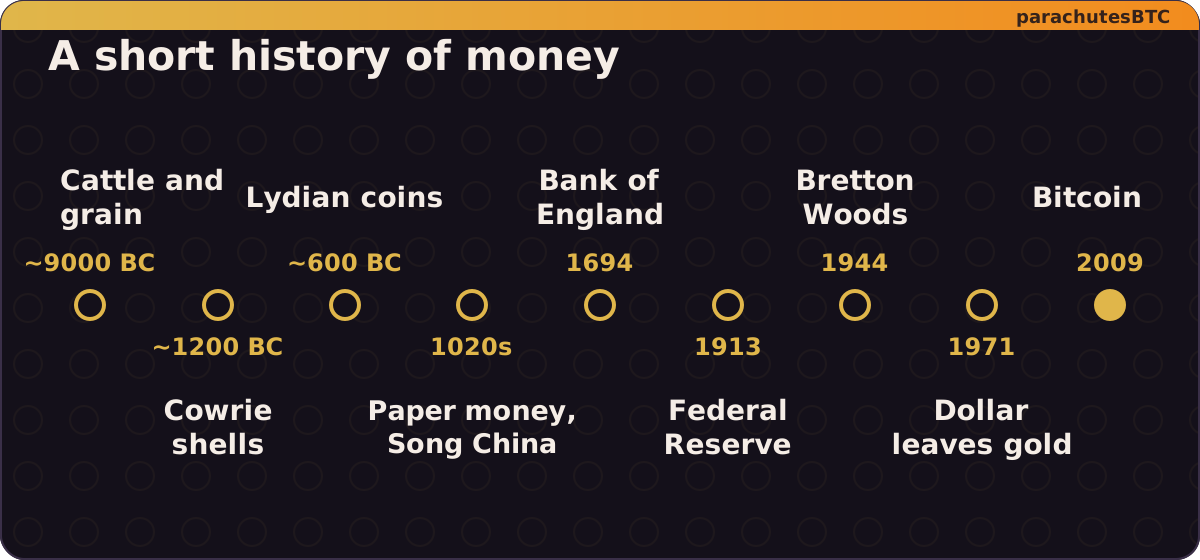
Lydian coins appeared around 600 BC and the dollar left gold in 1971. Roughly how many years did metal-backed money last?
Then prove it: a 3-question quiz · a challenge. The lesson marks itself complete at 100%.
After this lesson you can: tell the story of money from trade to paper in five steps.
Money was not invented by a king. It emerged. Carl Menger showed in 1892 that in any market, people drift toward holding the good that is easiest to sell on later. Over time one good wins, and that good becomes money.
Money emerged from trade, then moved step by step to new custodians.
What won, and why
Collectibles and commodities. Shells, beads, salt, cattle. Useful, but easy to find more of or hard to divide.
Silver and gold. Scarce, durable, divisible, recognisable. For about 2,500 years, precious metal was the money that lasted.
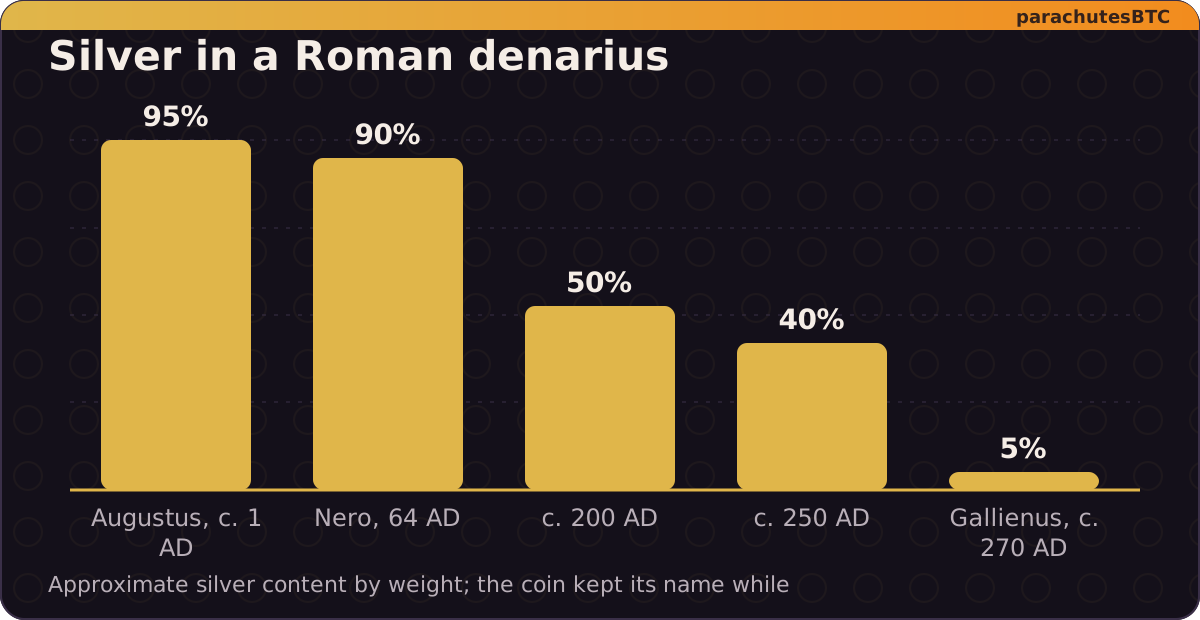
Coins. Stamped by rulers so weight and purity did not need checking each time. Also the first opportunity for rulers to cheat: Rome steadily cut the silver in the denarius until it was nearly worthless.
Paper notes. Began as receipts for metal held by a goldsmith or bank. Lighter to carry, and a new question: is the metal really there?
Bank money. Today most money is a number in a bank's database. Physical cash is a small fraction.
Debasement, Roman style: the silver in a denarius, approximate.
The pattern
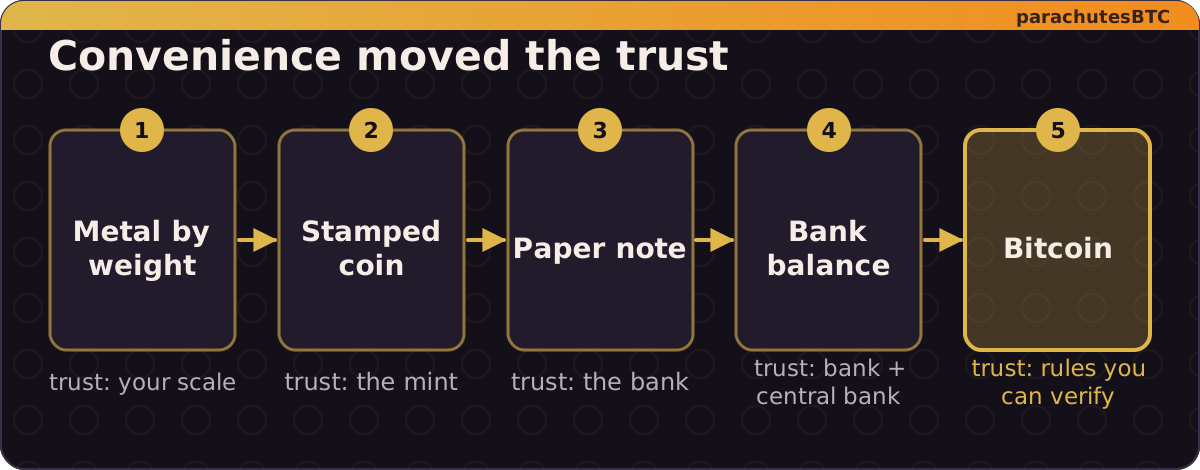
Who you had to trust at each step.
Each step made money more convenient and moved trust to a new party: the mint, the bank, the central bank, the government. Convenience is real. So is the risk that the trusted party changes the rules.