
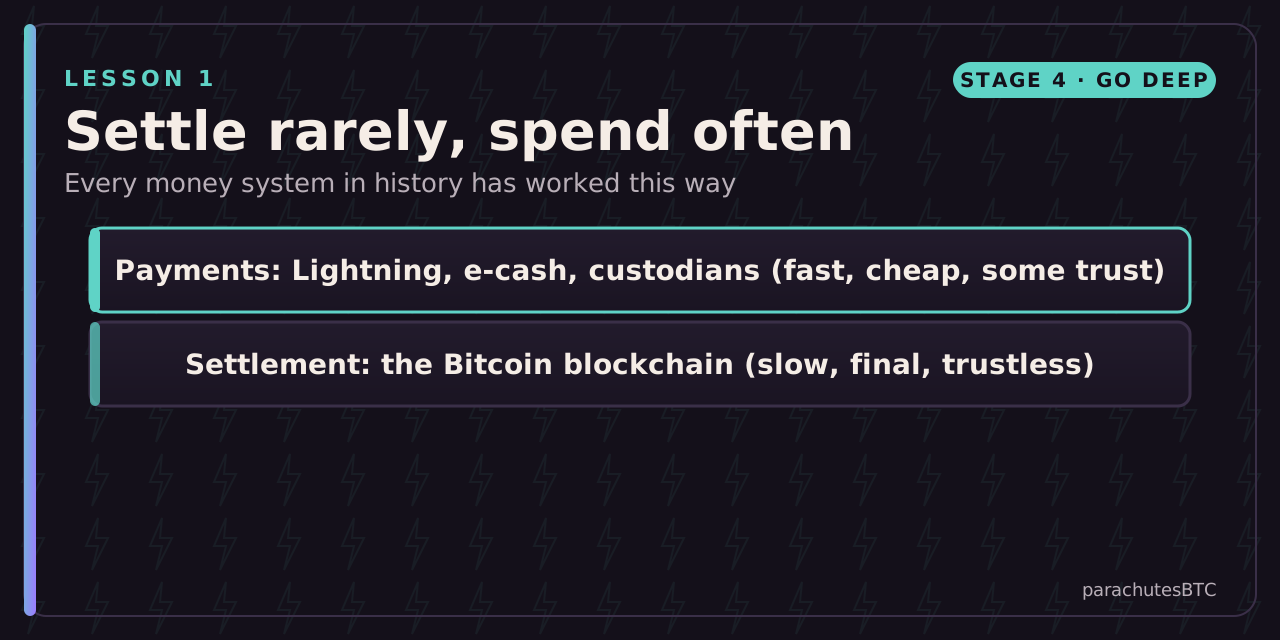
After this lesson you can: explain why the base layer is capped and what layers are for.
Bitcoin's base layer handles a few transactions per second. That is not a flaw someone forgot to fix. It is the cost of every node checking everything on ordinary hardware, which is what keeps the rules enforced by everyone rather than by data centres. The 2017 Blocksize War settled this: the chain stays small and verifiable.
Layers
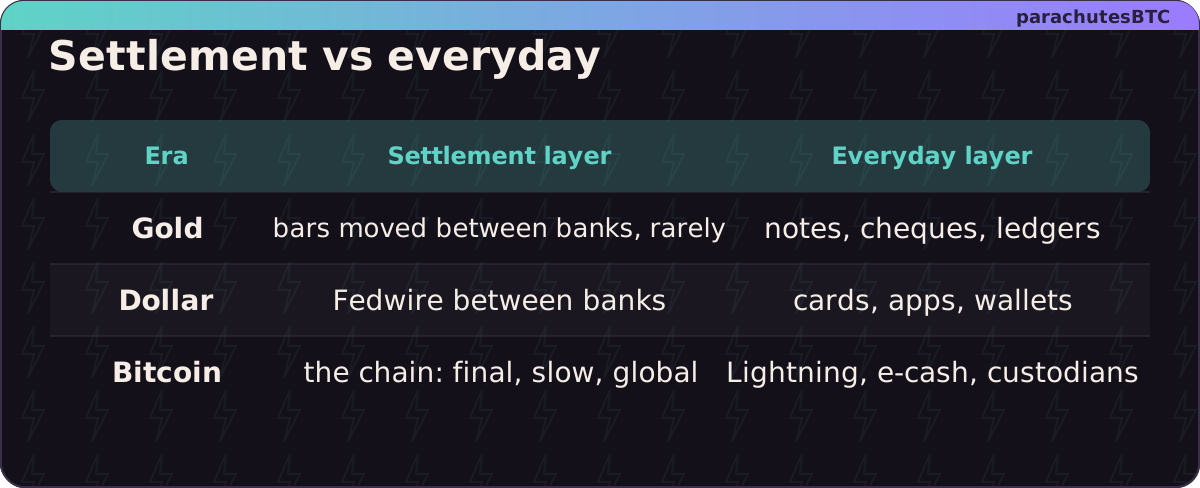
Money has always scaled in layers. Gold moved between banks rarely; notes and cheques circulated daily. Fedwire settles between banks; cards run on top. Bitcoin's base layer is the settlement layer. On top of it:
- Lightning: payment channels for instant, near-free payments, settling on-chain only when channels open or close.
- Federated systems (Fedimint) and e-cash (Cashu): trade some trust in a group or a mint for privacy and simplicity.
- Sidechains (Liquid): a separate chain pegged to bitcoin, run by a federation.
- Custodians: an exchange moving numbers in its database, settling on-chain in batches.
The trade-off at every layer
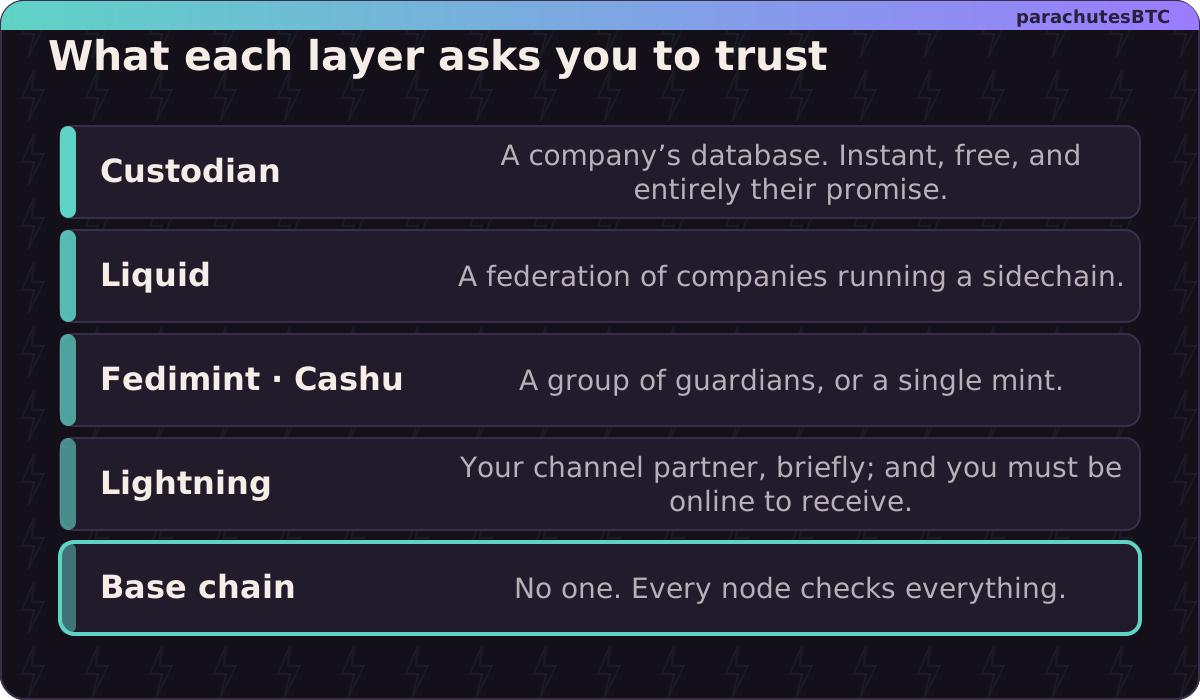
Each layer adds speed and takes something: trust in a counterparty, the need to be online, liquidity management, or privacy. The skill is knowing which layer you are on and what you are trusting. The base layer trusts no one; everything above it trusts someone, a little or a lot.
With roughly 2,500 transactions per block and a block every 10 minutes, about how many transactions per second does the base layer settle?