
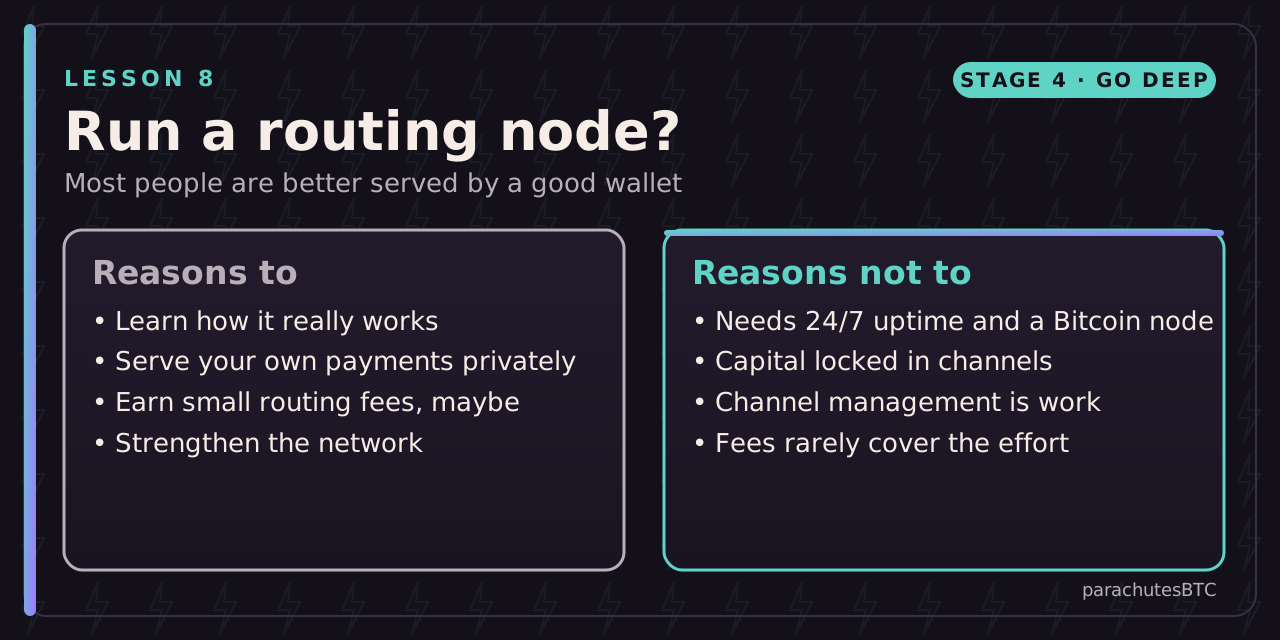
After this lesson you can: decide whether running a Lightning node is for you.
What a node does
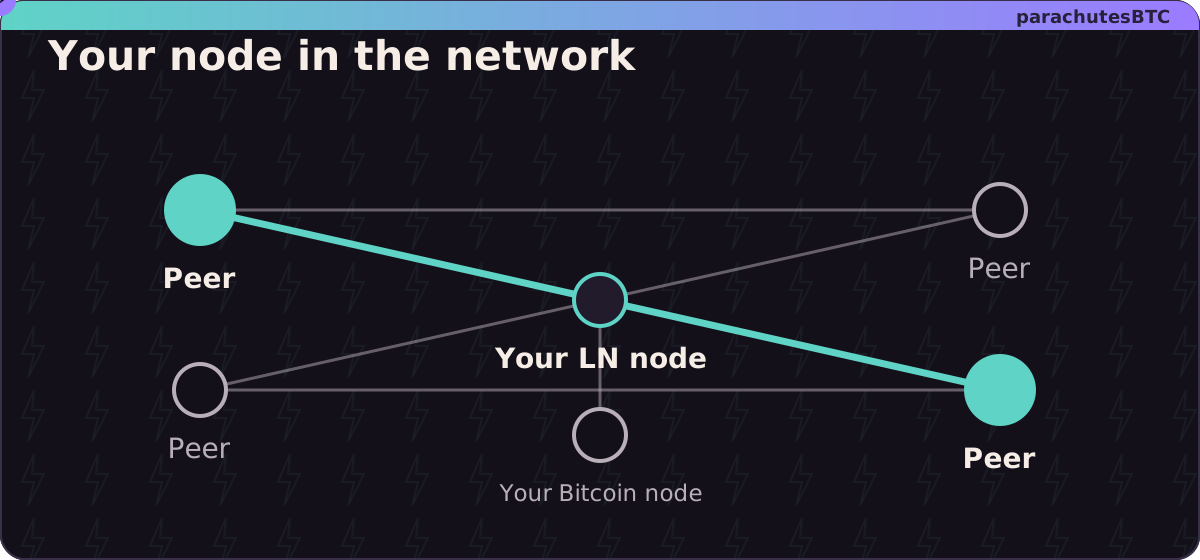
A Lightning node holds channels, routes other people's payments and talks to the Bitcoin node behind it. Running one means keeping it online around the clock, funding channels with real bitcoin, and managing liquidity so routes work.
Reasons to
- Understanding. Nothing teaches Lightning like opening a channel and watching a payment route.
- Sovereignty. Your payments go through your own node; no provider sees them.
- Supporting the network. Well-connected, balanced nodes make everyone's payments more reliable.
Reasons not to
- It needs a Bitcoin full node and a machine that stays on.
- Capital sits in channels earning little; routing fees are tiny, and profitable routing is a competitive business run by people with spreadsheets.
- Channel management (rebalancing, choosing peers, closing stale channels) is ongoing work.
- Backups are trickier than on-chain; an out-of-date channel backup can cost funds.
The practical path
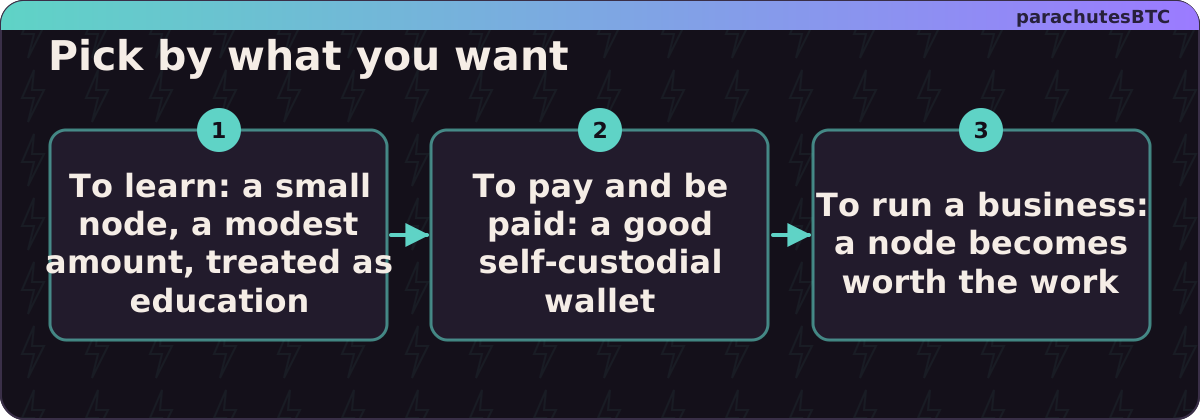
If you want to learn, run a node on a small machine with a modest amount, using one of the turnkey packages, and treat it as education. If you want to pay and be paid, use a good self-custodial wallet. If you run a business accepting bitcoin, a node becomes worth it. The Running a node course covers the Bitcoin node you would need first.
Course checklist: what you can now do
Tick each one you have actually done. The course is finished when they are all ticked, not when the quiz is.
A routing node earns 1,000 sats a day in fees on 10,000,000 sats of capacity. What is its annual return, in percent?