You buy $100 at $50,000, $100 at $25,000 and $100 at $100,000 per coin. What is your average cost per coin, in dollars? (Hint: total spent divided by total coins.)
Then prove it: a 3-question quiz · a challenge. The lesson marks itself complete at 100%.
After this lesson you can: explain what a recurring buy does and does not do, and set one up (or decide not to) with clear eyes.
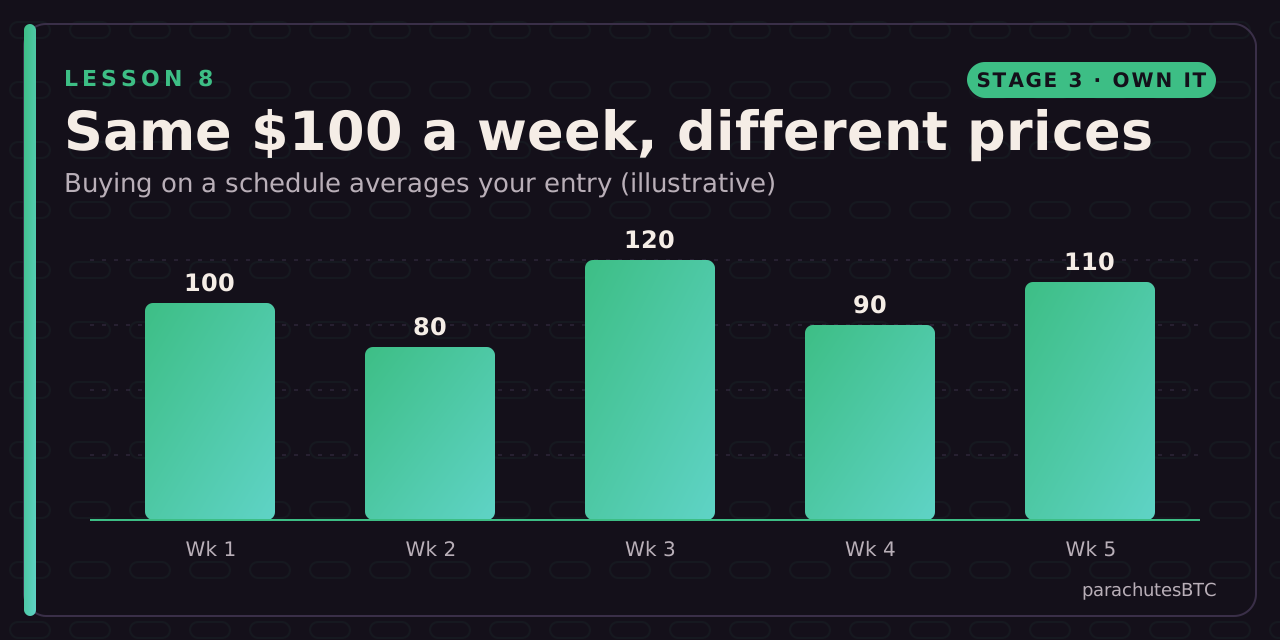
Dollar-cost averaging (DCA) means buying a fixed amount at fixed intervals (daily, weekly, monthly) regardless of price. $50 a week for a year is DCA. Most brokerages automate it, often with no fee on the recurring order.
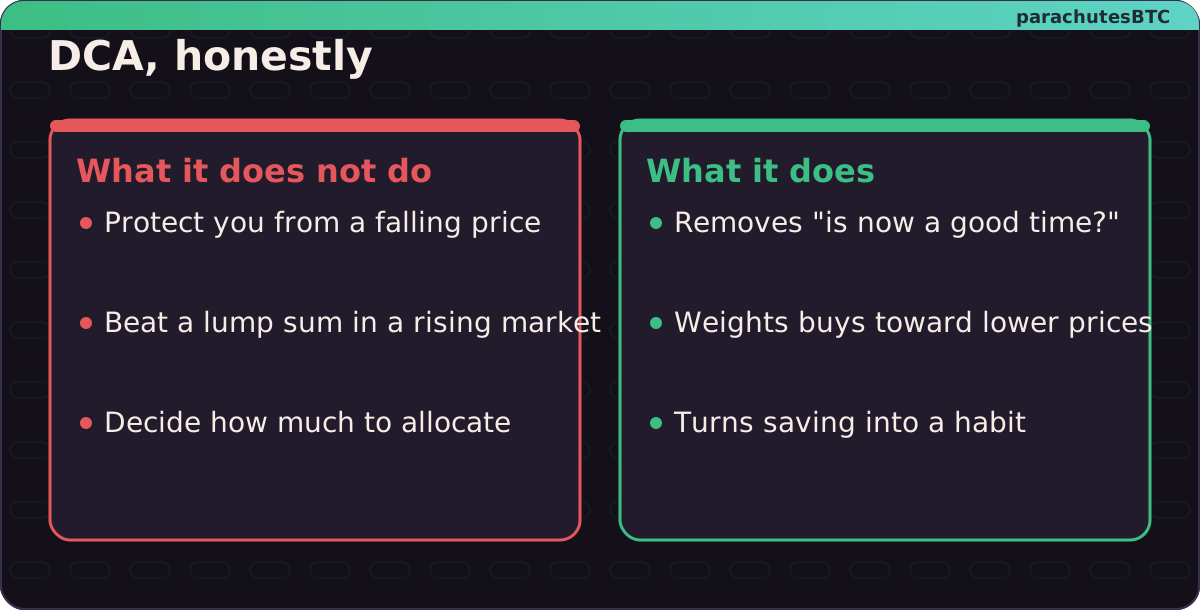
What it does
Removes the question "is now a good time?", which nobody can answer.
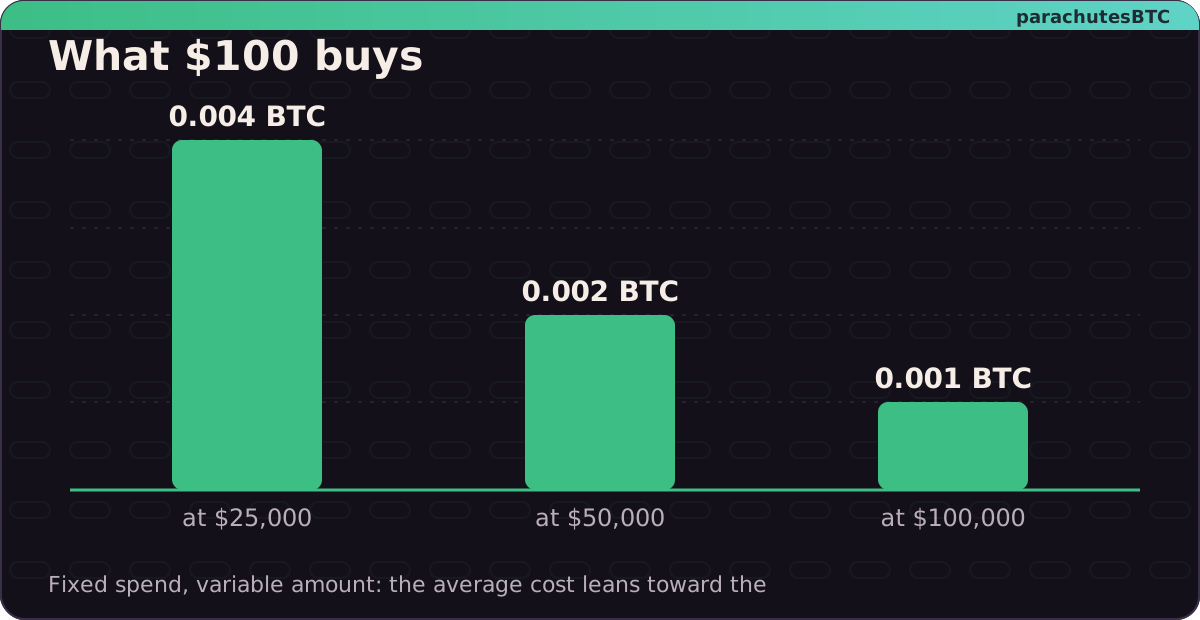
Buys more units when the price is low and fewer when it is high, so your average cost sits near the average price over the period.
Turns saving into a habit rather than a decision.
The same $100 buys more coin when the price is low. That is all DCA is.
What it does not do
It does not protect you from a falling price. If bitcoin falls for a year, your DCA is underwater for a year.
It is not better than a lump sum in a rising market; a lump sum invested earlier has more time in the market. River's research found that the exact hour or day you buy barely matters; the consistency does.
It does not decide how much to allocate. That is a separate question about your situation, and not one this site answers.
The DCA calculator replays any schedule against actual daily prices. The lump sum vs DCA tool compares both for any period. Past results do not predict future ones.
MINI CHALLENGEAverage cost
You buy $100 at $50,000, $100 at $25,000 and $100 at $100,000 per coin. What is your average cost per coin, in dollars? (Hint: total spent divided by total coins.)